
Why Metal Comes Up So Often in Kansas City Metro Conversations
Homeowners across the Kansas City metro bring up metal roofing more than almost any other material question, and it's usually after a rough storm season or when they're planning to stay in a house for the long haul. Hail, high wind, and heavy spring rain are regular visitors here, and metal has a reputation for standing up to all three better than standard asphalt shingles.
That reputation is mostly earned, but metal roofing covers a wide range of products, from thin exposed-fastener panels to heavier standing seam systems with concealed clips. The differences between those options matter more than most homeowners realize when they start pricing out a project, so it helps to understand what's actually happening under the surface before deciding.
How Standing Seam and Screw-Down Panels Are Actually Built
Both systems start with the same basic idea: long metal panels run from the roof's ridge to its eave, shedding water down a continuous slope instead of relying on overlapping shingles. Where they differ is in how the panels attach to the roof deck and to each other, and that difference drives almost everything else about cost, maintenance, and lifespan.
Standing Seam: Concealed Fasteners, Raised Seams
Standing seam panels interlock along raised vertical seams, and the fasteners that hold them down are hidden underneath those seams rather than exposed to the weather. This means there are no screw heads sitting on the roof's surface for sun, rain, and temperature swings to work loose over the years.
Because the panels can expand and contract with temperature changes without pulling against a fixed screw, standing seam tends to hold its seal longer with less maintenance. It's generally the pricier option of the two, but it's also the one most manufacturers back with longer warranty terms.
Screw-Down: Exposed Fasteners, Lower Upfront Cost
Screw-down, or exposed-fastener, panels attach directly through the face of the panel into the roof deck using gasketed screws. It's a simpler installation, which usually makes it the less expensive metal option, and it still performs well against wind and hail.
The tradeoff is that every one of those exposed screws is a potential point where the rubber gasket can dry out, shrink, or back out over time, especially with Missouri's swing between summer heat and winter cold. Most screw-down roofs need their fasteners checked periodically to stay watertight over the full life of the panel.
| Feature | Standing Seam | Screw-Down |
|---|---|---|
| Fasteners | Concealed under raised seams | Exposed through panel face |
| Maintenance | Minimal, few weak points | Periodic fastener checks recommended |
| Typical cost | Higher upfront | Lower upfront |
| Expansion handling | Panels float, seams flex | Panels fixed at each screw |
What Metal Panels Are Actually Made Of
Residential metal roofing is typically formed from steel or aluminum coated to resist rust and UV breakdown, then finished with a baked-on paint system that holds its color for decades. The metal itself is thin, usually measured in gauge, but it's strong enough to span the roof deck without sagging when properly fastened and supported.
Underneath the panels sits a layer of underlayment and, on most modern installs, solid decking, which is what actually determines how quiet or loud the roof sounds in rain and how well it insulates the attic below. A roof's performance depends as much on what's under the metal as the metal itself, which is why installation quality matters more than the brand name on the panel.
Step-by-Step: How a Metal Roof Goes On
A metal roof install follows a fairly consistent sequence regardless of whether the panels are standing seam or screw-down, though the final fastening step is where the two systems diverge.
- Remove or inspect old roofing: Crews either strip the roof down to bare decking or confirm the existing layer can support a roof-over, depending on condition and local code.
- Repair the decking: Any soft, rotted, or damaged sections of the roof deck get replaced before new material goes down.
- Install underlayment: A water-resistant barrier goes over the deck to provide a second layer of protection against wind-driven rain.
- Set flashing and edges: Metal edge trim and flashing go in around valleys, chimneys, and vents where water concentrates.
- Run the panels: Panels are measured, cut, and set from one end of the roof to the other, either clipped or screwed into place.
- Seal seams and penetrations: Seams are locked or sealed and every penetration point is checked for a tight, weather-ready fit.
- Final walkthrough: The finished roof gets a visual check for straight lines, secure panels, and properly sealed trim before the crew leaves.
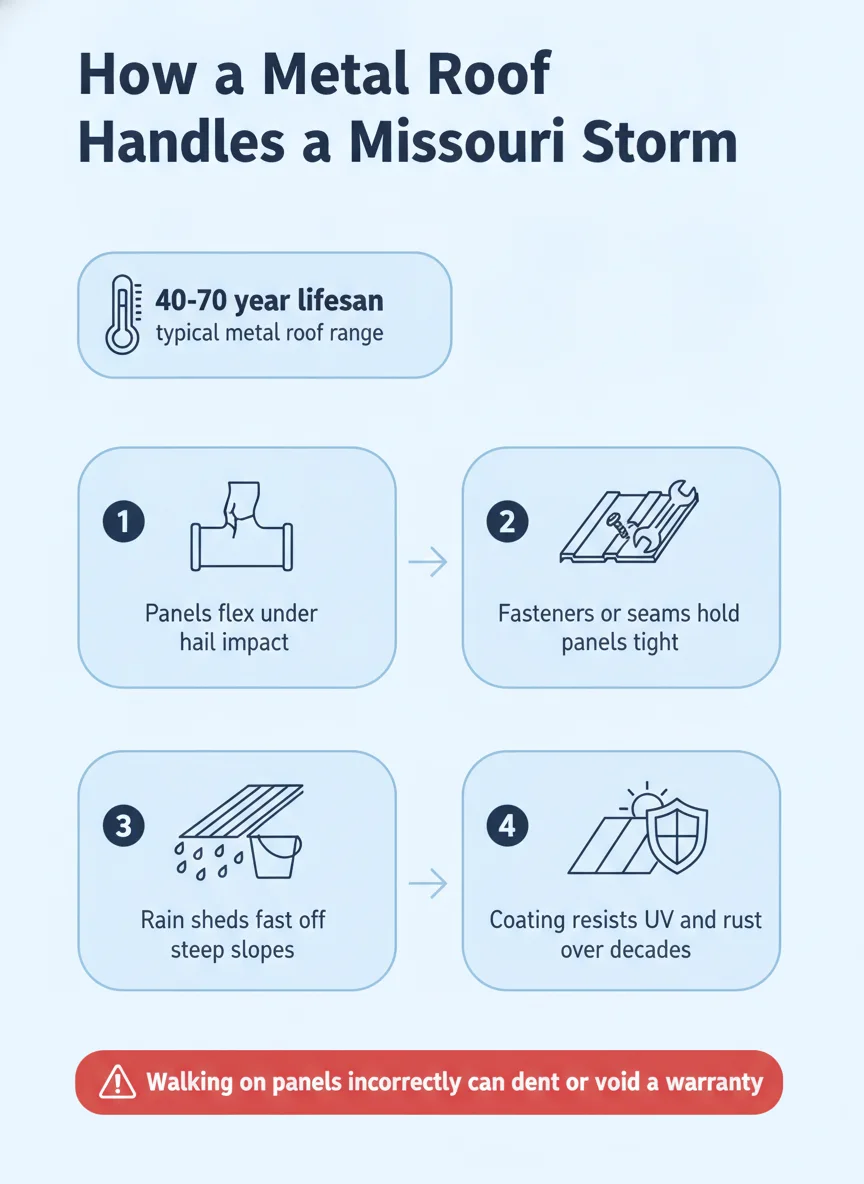
How Does a Metal Roof Hold Up to Missouri Weather?
Metal roofing generally performs well against the wind and rain that come through the region, and its steep-slope design sheds heavy spring and summer downpours faster than lower-profile materials. The real question most homeowners actually want answered is how it holds up against hail, since that's the damage this area sees most often.
Hail and Dent Resistance
Large hail can dent metal panels, and thinner, lower-gauge panels are more susceptible than thicker ones. In most cases the dents are cosmetic rather than structural, meaning the roof still sheds water and performs its job, but the look of the roof can change after a significant hail event.
Homeowners weighing metal against other materials after reading about impact-resistant Class 4 shingles should know both options are aimed at reducing hail damage, just through different mechanisms: shingles absorb impact, metal resists penetration but can show cosmetic marking.
Wind and Long-Term Aging
Properly installed metal panels are rated to resist high wind uplift, which matters in a region that sees strong spring storm fronts. Over the decades, the coating is what ages, not the structural metal underneath, so a roof that still looks faded or chalky may still be structurally sound even as its finish wears.
Eventually, fading, chalking paint, or loosening fasteners signal that a metal roof is reaching the end of its serviceable life, even if that timeline is measured in decades rather than years the way it is with asphalt.
What Can a Homeowner Handle, and What Needs a Pro?
Homeowners can handle the easy stuff: visually checking for loose debris, clearing nearby tree limbs that overhang the roof, and keeping gutters clear so water doesn't back up under the roof's edge. Those small habits protect the coating and fastener system without requiring anyone to get on the roof itself.
Anything involving the panels, seams, or fasteners themselves calls for a licensed roofer. Re-sealing a screw-down roof's fasteners, repairing a dented panel, or diagnosing a leak at a seam all require specialized tools and an understanding of how the specific panel system was engineered to move and seal.
A full metal roof install is squarely a professional job from start to finish. Cutting and fastening panels to the correct tolerance, flashing valleys and penetrations correctly, and matching the right gauge and coating to the home's needs all take training most homeowners don't have reason to acquire for a once-in-a-lifetime project.
Deciding If Metal Is Right for a Missouri Roof
Metal roofing is a serious long-term option for homeowners across the Kansas City metro who want a material built to outlast several rounds of shingle replacement and shrug off the region's hail and wind. It isn't the right fit for every budget or every roof, and the standing seam versus screw-down decision should factor in how long the homeowner plans to stay in the home and how much upfront cost they're comfortable with.
Anyone comparing a metal upgrade against a standard roof replacement in towns like Liberty should get a straightforward comparison of both options before committing, and homeowners dealing with storm damage right now may also want to read how hail or wind damage after a storm usually plays out before deciding what to repair or replace. Signature Roofing can walk Kansas City metro homeowners through what each material actually means for their specific roof.
Frequently asked questions
Is a metal roof worth it in Missouri?
Metal can be a strong long-term option in Missouri because it typically lasts far longer than asphalt and sheds heavy rain and snow quickly. Whether it's worth it for a specific home depends on budget, roof pitch, and how long the homeowner plans to stay in the house.
Does hail dent a metal roof?
Standard metal panels can dent under large hail, though many homeowners find the dents are cosmetic rather than functional. Thicker gauge panels and certain coatings resist denting better than thin, budget-grade panels.
Is standing seam better than screw-down metal panels?
Standing seam generally performs better long-term because its concealed fastener system has fewer penetration points where water or wind can work a seal loose. Screw-down panels cost less upfront but typically need the exposed fasteners checked and re-sealed periodically over the roof's life.
Is a metal roof loud in the rain?
A properly installed metal roof with solid decking and underlayment is usually no louder than an asphalt roof, since the decking absorbs most of the sound. The noisy-in-the-rain reputation mostly comes from older barn-style installs without decking underneath.
Can you put a metal roof over an existing shingle roof?
In many cases a metal roof can go over a single layer of existing shingles, but this depends on local code and the condition of the decking underneath. A licensed contractor can inspect the roof to confirm whether a roof-over or full tear-off is the right call.