
Two Warranties, One Roof
Every new roof in the Kansas City metro comes stapled with two different pieces of paper, and most homeowners only remember one of them a few years later when something goes wrong. The shingle manufacturer issues a warranty on the material itself. The roofing contractor who installed it issues a separate warranty on the labor. They are not the same document, they do not cover the same failures, and knowing which one applies can be the difference between a free fix and an out-of-pocket repair.
This matters more in Missouri than in a lot of other states because the weather here is hard on roofs year round. Hot, humid summers bake shingles, winter freeze-thaw cycles stress seams and flashing, and spring brings wind and hail that test every seam in the system. A roof that's installed correctly and made from a sound product should hold up through all of it, but when something fails, you need to know who to call first, and this guide walks through exactly that.
Why Two Separate Warranties Exist
The split exists because a roof failure can come from two completely different sources: a flaw in the product itself, or a mistake in how it went on the house. No single company controls both halves of that equation unless the installer and the manufacturer are the same entity, which they almost never are. So the industry split the risk: the manufacturer stands behind what they make, and the installer stands behind how they install it.
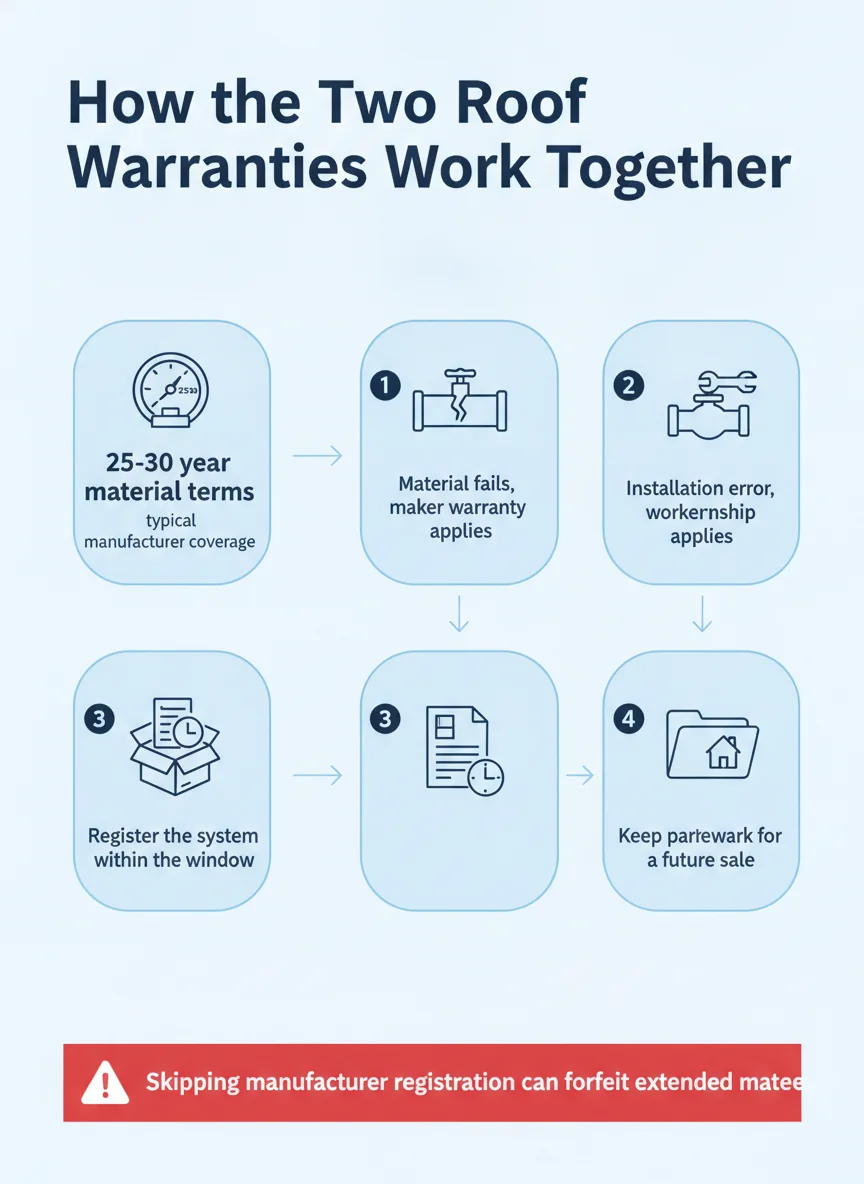
What the Manufacturer Warranty Covers
A manufacturer warranty covers defects in the shingles, underlayment, or other components as they came off the production line, things like premature granule loss, cracking, or a shingle that fails to seal properly through no fault of the installer. Most manufacturer warranties run for decades on the material itself, though many taper down to a prorated or limited level of coverage after the first several years rather than staying at full value for the entire term.
What it does not cover is installation error. If a shingle leaks because it wasn't nailed correctly or because flashing around a chimney was installed poorly, that's not a material defect, and the manufacturer will deny the claim. This is also where contractor certification status matters: a Preferred Contractor designation, which Signature Roofing holds with Owens Corning, can unlock enhanced, longer manufacturer coverage that isn't available through just any installer.
What the Workmanship Warranty Covers
A workmanship warranty, sometimes called a labor warranty, covers the installer's side of the job: flashing, fastening, ventilation setup, and the general quality of the work performed. If a leak shows up because of how the roof was put together rather than a flaw in the shingles themselves, this is the warranty that applies, and it's the contractor, not the manufacturer, who makes it right.
Workmanship warranty terms vary widely by contractor, from a single year to a decade or more, and the length is often a decent signal of how confident a company is in its own crews. A written workmanship warranty that transfers to a new owner if the home sells also tends to hold more real value, since it protects the investment even after you move.
| Question | Manufacturer Warranty | Workmanship Warranty |
|---|---|---|
| Who issues it? | The shingle or material maker | The roofing contractor |
| What it covers | Defects in the material itself | Errors in how the roof was installed |
| Typical length | Often decades, sometimes prorated after early years | Varies by contractor, commonly several years to a decade or more |
| Common reason for denial | Improper ventilation, unregistered system, non-maker repairs | Damage from storms or outside causes, unauthorized repairs |
The System Behind the Paperwork
A roof isn't just shingles nailed to plywood, it's a system of parts working together: underlayment, flashing, ventilation, and the shingles themselves, each one doing a specific job. Manufacturer warranties increasingly cover the whole system rather than just the top layer, but only when every component in that system comes from the same approved lineup and is installed according to the maker's specifications.
That's part of why mixing and matching products from different manufacturers, or layering a new roof over an old one instead of a full tear-off, can create warranty gaps homeowners don't see coming. If you're weighing a full roof replacement against a repair, understanding how the system warranty works is one more reason a complete, documented installation tends to protect you better long term than a patchwork fix.
Step-by-Step: Making Sure Your Warranty Actually Holds Up
Warranty coverage isn't automatic just because a roof is new. A few concrete steps, done at the right time, are what actually keep both warranties intact for the life of the roof.
- Get it in writing: Ask for both warranty documents in writing before the job starts, not after, so you know exactly what's promised and by whom.
- Confirm the contractor's certification: A manufacturer-certified installer, like an Owens Corning Preferred Contractor, often qualifies the job for extended material coverage a non-certified installer cannot offer.
- Register within the window: Many enhanced manufacturer warranties require registration within a set period after installation, so handle this right away rather than letting it slip.
- Keep every document: Store both warranty certificates and your final invoice somewhere you'll find them again, ideally digitally, in case you need to file a claim years from now.
- Use licensed repair help: Having unrelated contractors perform repairs on a warrantied roof can void coverage, so route future repairs back through a licensed roofer who understands the warranty terms.
- Keep ventilation clear: Don't block soffit vents or ridge vents during other home projects, since inadequate airflow is a leading cause of manufacturer claim denials.
- Pass the paperwork at sale: If your workmanship warranty transfers, hand the documentation to the buyer at closing so the coverage follows the house, not just you.
What You'll Actually Find When a Claim Comes Up
When It's a Material Issue
Material-side failures tend to look consistent across a roof rather than isolated to one spot, things like widespread granule loss, shingles cracking in a pattern across the field of the roof, or a batch of shingles that never sealed properly despite correct installation. These patterns point toward a product issue rather than a one-off installation mistake, and a manufacturer claim is the right path.
Filing typically involves documentation: photos, the original invoice showing the product used, and sometimes an inspection by the manufacturer's own representative. This process can take time, which is one more reason keeping your paperwork organized from day one pays off later.
When It's an Installation Issue
Installation-side failures usually show up in specific, localized spots: a leak around a single penetration, a seam that never sealed along one section, or flashing that's visibly loose or missing in one area. These are the signs of a workmanship problem rather than a material one, and they're exactly what a roof repair call and a workmanship warranty claim are meant to address.
A reputable contractor will walk the roof with you, identify whether the issue traces back to installation, and handle the fix under warranty without a fight. If you're unsure which category a problem falls into, that's a normal question to bring to whoever installed the roof rather than something you're expected to diagnose yourself.
What a Homeowner Can Handle vs What Needs a Pro
Reading and organizing your warranty paperwork, registering the product with the manufacturer, and keeping records of any maintenance you perform are all things a homeowner can and should manage without any special training. These are administrative tasks, not roofing tasks, and staying on top of them protects the coverage you already have.
Diagnosing whether a failure is a material defect or an installation error, and performing any repair, is not a do-it-yourself job. Both categories involve working at height, understanding how flashing and underlayment interact, and in many cases documenting the issue in a way that satisfies a manufacturer's claims process. A homeowner poking at a suspected leak without that background can accidentally void a warranty by making an unauthorized repair.
Licensed roofers also carry the knowledge of which manufacturer programs apply to which products and installations, something that changes periodically and isn't always obvious from the paperwork alone. If you're dealing with wind or impact damage specifically, storm and hail damage repair from a licensed crew keeps both warranties intact while also giving you documentation if you end up filing an insurance claim.
Keeping Both Warranties Working For You
The whole point of understanding this split is simple: when something goes wrong with your roof, you want to know in thirty seconds whether you're calling the manufacturer or the installer, instead of guessing and losing time. Homeowners who keep their paperwork, register their systems, and route repairs through a licensed contractor are the ones who actually collect on these warranties when they need them. For related reading on keeping a roof system sound between now and then, see our guide on storm prep for Kansas City metro homes.
Homeowners in Overland Park and across the metro ask about warranty coverage most often right after a new installation or right after storm season, and both are good times to pull your paperwork out and double check it. Signature Roofing backs its installations with a 10-year workmanship warranty that transfers to the next owner, in writing, so the coverage follows the house as long as it stands.
Frequently asked questions
What's the difference between a manufacturer warranty and a workmanship warranty?
A manufacturer warranty covers defects in the shingles or other materials themselves, while a workmanship warranty covers mistakes made during installation, like improper nailing or flashing. They come from two different parties and cover two different kinds of failure.
Does a roof warranty transfer if I sell my house?
It depends on the specific warranty's terms, which is why it matters to read them before you sign. Our workmanship warranty is 10 years and transfers to the next owner if the home sells, and manufacturer warranties often have their own transfer rules and windows.
Can improper ventilation void a roof warranty?
Yes, inadequate attic ventilation is one of the most common reasons manufacturers deny material warranty claims. Shingles need airflow underneath them to perform as designed, so a ventilation problem can shorten the life of the material even if the shingle itself wasn't defective.
What voids a workmanship warranty?
Unauthorized repairs by another contractor, unresolved maintenance issues, or damage from a separate cause like storm impact typically fall outside a workmanship warranty's coverage. The workmanship warranty is meant to cover installation errors, not everything that can happen to a roof over time.
Do I need to register my roof warranty?
Many extended manufacturer warranties require registration within a set window after installation, so check your paperwork as soon as the job wraps. A missed registration deadline can reduce you to the manufacturer's basic limited warranty instead of the longer, enhanced coverage a Preferred Contractor installation can unlock.