
Why the Adjuster Meeting Is the Most Important Part of Your Claim
After a hailstorm or windstorm moves through the Kansas City metro, the insurance adjuster's visit is the single conversation that determines whether your claim moves forward and for how much. It's easy to treat it as a formality, something that happens after the real decision has already been made. In practice, it's the opposite. The adjuster's notes, photos, and measurements from that one visit become the foundation for the entire settlement, so what happens on the roof that day matters more than almost any phone call before or after it.
Homeowners across Riverside, Parkville, and the wider metro often go into this meeting without realizing they can prepare for it, or that they're allowed to have their own contractor present. Understanding what the adjuster is looking for, and what to have ready before they arrive, puts you in a much stronger position when the estimate comes back.
What Is the Adjuster Actually Doing Up There?
An insurance adjuster's job during a storm damage inspection is to document the condition of the roof in a way that's consistent and defensible, not to make a judgment call about repairs or replacement on the spot. They're trained to look for patterns of damage that match the type of storm reported, measure the extent of it, and translate what they find into a line-item estimate their company can approve.
The Test Square
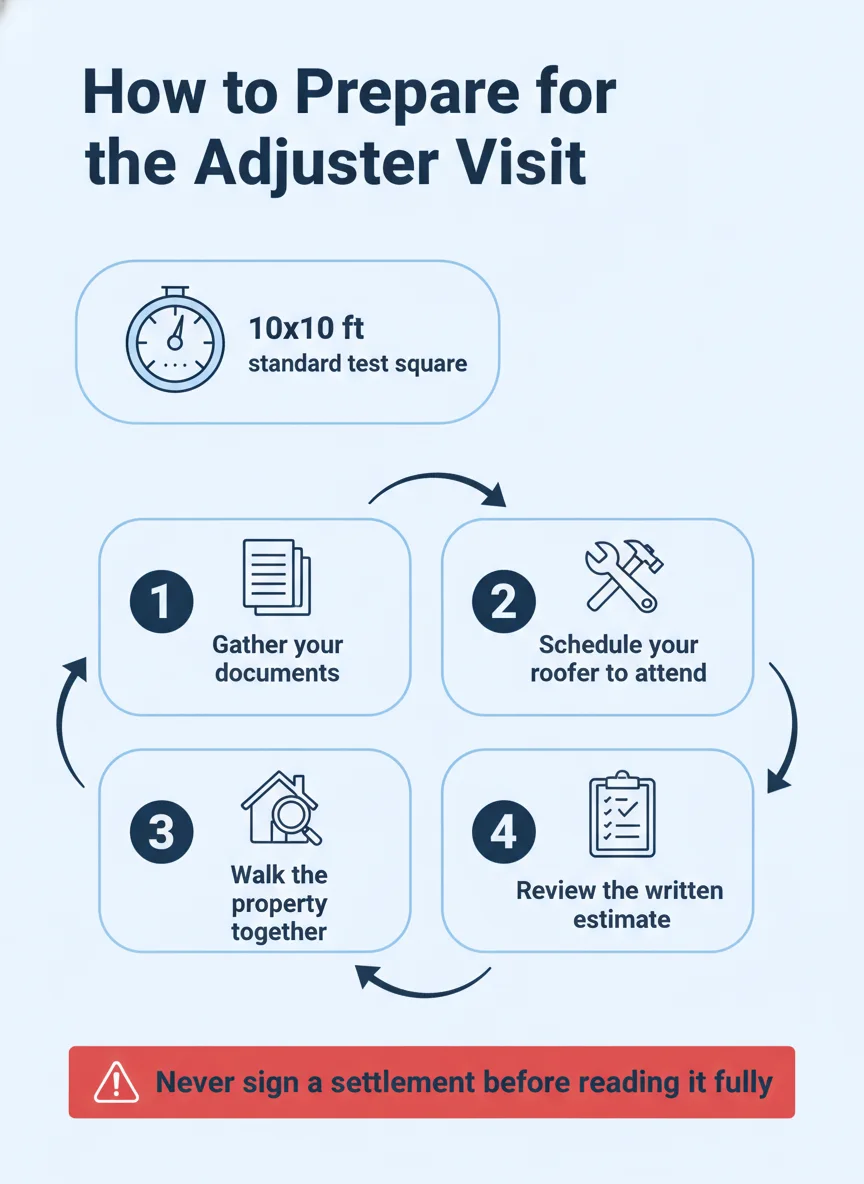
Most adjusters use a method called a test square, a marked section of roof, typically around 10 feet by 10 feet, where they count hail hits or wind-damaged shingles. The logic is that counting damage in a sample area and comparing it against industry thresholds gives a reasonably accurate read on the whole roof without measuring every single shingle.
The catch is that where the adjuster chooses to place that test square matters. A square on a slope that caught less wind or hail than the rest of the roof can undercount the real damage. This is one of the main reasons it helps to have your roofer there, since they can point out which slopes took the worst of the storm and ask that those areas be included in the sample.
Photos and Measurements
Beyond the test square, the adjuster will typically photograph the roof's overall condition, any visible damage to flashing, vents, or gutters, and sometimes the attic or interior ceilings if there's reported water intrusion. They'll also note the roof's apparent age and general wear, since pre-existing wear and tear is usually excluded from a storm claim.
These photos and measurements get compiled into a report that becomes the basis for the dollar estimate the insurance company sends back. If something gets missed or misjudged in this step, it's much harder to correct after the fact than it is to flag it while everyone is still standing on the roof.
| Scenario | What the Adjuster Typically Does | What You Should Do |
|---|---|---|
| Hail damage on multiple slopes | Places test squares on a sample of slopes | Ask that the worst-hit slopes are included, not just the easiest to reach |
| Wind-lifted or missing shingles | Counts missing or creased shingles and checks for matching granule loss | Point out any areas where shingles were already replaced after a prior repair |
| Interior water stains reported | Requests access to the attic or affected ceiling | Have those areas accessible and note when the staining first appeared |
| Older roof near end of lifespan | Separates storm damage from general wear in the report | Ask your roofer to help clarify which issues are storm-related versus age-related |
What to Have Ready Before the Adjuster Arrives
A little preparation before the appointment makes the whole meeting go faster and keeps the conversation focused on facts rather than guesswork. Pull together your policy documents so you know your coverage and deductible, along with the date the storm occurred if you have it from a local weather report or your own notes.
If you've already had a roofer walk the property, bring their written notes or estimate to the meeting. Having a second set of eyes on record, especially one that's already identified specific damage points, gives the adjuster a reference and shows that the damage was documented close to when it happened rather than weeks later.
Step-by-step: Meeting the Insurance Adjuster
Most adjuster appointments follow a similar order. Knowing what's coming next helps you stay organized and makes sure nothing gets skipped.
- Confirm the appointment: Get the date and time in writing from your insurance company and ask whether the adjuster will need roof access, attic access, or both.
- Schedule your roofer: If you'd like a roof replacement estimate or a second opinion on hand, schedule your roofer to be on-site at the same time as the adjuster.
- Gather your documents: Bring your policy, the storm date, and any photos taken shortly after the damage occurred, along with any prior repair records.
- Walk the property together: Let the adjuster and your roofer walk the roof and discuss the damage together, including which slopes took the worst of the storm.
- Review the test square placement: Ask where the test square was placed and whether it reflects the roof's worst-hit areas, not just the most accessible ones.
- Request the written estimate: Ask for a copy of the adjuster's report and estimate once it's finalized so your roofer can compare it against their own scope of work.
- Don't sign on the spot: Take time to review the settlement offer with your roofer before accepting or signing anything the adjuster presents that day.
What Happens If the Estimates Don't Match?
When Your Roofer's Estimate Is Higher
It's common for a roofer's estimate to come in higher than the adjuster's initial number, especially if the roofer identified damage on slopes the adjuster didn't fully sample, or included code-required work the adjuster's report left out. This difference doesn't mean the claim is being denied. It usually means there's a gap between the two scopes of work that needs to be reconciled.
In these cases, your roofer can submit what's often called a supplement, a request to the insurance company to revisit specific line items with additional photos or measurements to support the difference. This back-and-forth is a normal part of the process, not a sign that something has gone wrong.
When the Insurer's Estimate Is Lower
Sometimes the gap comes down to pricing differences for materials or labor rather than a disagreement about the damage itself. Your roofer can walk you through which parts of the estimate reflect actual scope differences and which reflect pricing assumptions, so you understand what you're negotiating and why.
Either way, it helps to have insurance claim assistance from a roofer who's been through this process before, since they can speak the adjuster's language and point to specific line items rather than arguing in general terms.
Should You Handle This Alone, or With Your Roofer There?
You're allowed to meet with the adjuster on your own, and plenty of homeowners do. If the damage is limited and straightforward, like a handful of missing shingles after a wind event, a homeowner who's comfortable with the process can sometimes manage the meeting without extra help.
Where it gets harder is when the damage is spread across multiple slopes, when there's water intrusion involved, or when the roof is old enough that separating storm damage from general wear becomes a judgment call. In those situations, having a roofer there to point out specifics on the spot, rather than trying to describe them over the phone afterward, tends to produce a more accurate report the first time around.
There's no requirement either way, and the choice usually comes down to how confident you feel reading a roof report and arguing specifics with an adjuster who inspects properties for a living. Many homeowners find it's simply easier to have a second set of trained eyes on the roof with them.
Getting Ready for Your Own Adjuster Meeting
The adjuster meeting doesn't have to be stressful if you go in prepared. Know your policy, have your documentation ready, and understand that the test square and photos taken that day are going to shape the entire claim from that point forward.
If you're in the middle of a storm damage claim and want another set of eyes on the roof before or during the adjuster's visit, Signature Roofing can walk the property with you and help make sense of the report once it's in hand.
Frequently asked questions
Should I be home when the insurance adjuster inspects my roof?
Yes, you should be present, and ideally so should your roofer. Having both parties there means questions about the damage get answered on the spot instead of through phone calls and delays afterward.
What is a test square in a roof inspection?
A test square is a marked-off section, usually about 10 feet by 10 feet, that the adjuster uses to count hits or damage points and estimate the condition of the whole roof. It's a standard sampling method, not a judgment of your entire roof from one spot.
What should I bring to the adjuster meeting?
Bring your policy documents, any photos you took of the damage right after the storm, and the date the damage occurred if you know it. If a roofer already inspected your roof, bring their written notes or estimate too.
What happens if the adjuster's estimate is lower than my roofer's quote?
This happens often, and it doesn't mean your claim is denied. It usually means a conversation needs to happen between your roofer and the insurance company to reconcile the scope of work, sometimes called a supplement.
Can my roofer talk directly to the insurance adjuster?
Yes, in most cases your roofer can meet the adjuster on-site and discuss the scope of damage directly, with your permission. Many homeowners find this takes pressure off them and keeps the conversation focused on the roof itself.