
Spring storms and the Kansas City metro
The Kansas City metro sees a real mix of severe spring weather most years, with fast-moving storm systems that bring both hail and straight-line wind through the region. Homes across Riverside, Overland Park, Olathe, and the surrounding towns tend to see damage in waves tied to those storm tracks rather than evenly spread out over time, which is part of why a single bad system can leave a noticeable amount of roof damage across a wide area in one afternoon.
The tricky part about hail and wind damage is that it often doesn't look like much from the ground. A roof can take a real hit and still appear intact from the driveway, which is exactly why an actual inspection matters more than a visual guess after a storm rolls through.
What's actually happening to the roof
Hail and wind affect a roof in different ways, and knowing the difference helps set expectations for what an inspection is looking for.
Hail bruising and granule loss
Hailstones striking a shingle can knock loose the granules that protect the asphalt layer underneath from UV exposure, leaving a small dark spot called a bruise. Enough of these spots across a roof accelerate aging significantly, since the exposed asphalt breaks down faster once its protective layer is gone.
Bruising isn't always visible from a distance and can be easy to miss on a quick walk-around. It's one of the more common findings during a post-storm inspection and one of the harder things for a homeowner to reliably spot on their own.
Wind-lifted, creased, or missing shingles
Strong wind can lift a shingle's edge and crease it at the fold line, or peel it up entirely if the wind gets underneath the tab. A creased shingle has a weakened seal even if it looks mostly fine, which makes it a likely spot for a future leak.
Missing shingles are the more obvious version of wind damage and usually get spotted quickly, but the creased and lifted ones nearby often get missed in the same storm event. Both matter for a full accounting of the damage.
| Damage Type | How It Looks | What It Affects |
|---|---|---|
| Hail bruising | Small dark spots, granules missing | Long-term wear, UV protection |
| Wind creasing | Folded or cracked shingle tabs | Shingle seal, leak risk |
| Missing shingles | Bare patches on the roof deck | Immediate exposure to water |
| Impact to decking | Soft spots under damaged shingles | Structural integrity of that section |
What homeowners can check after a storm
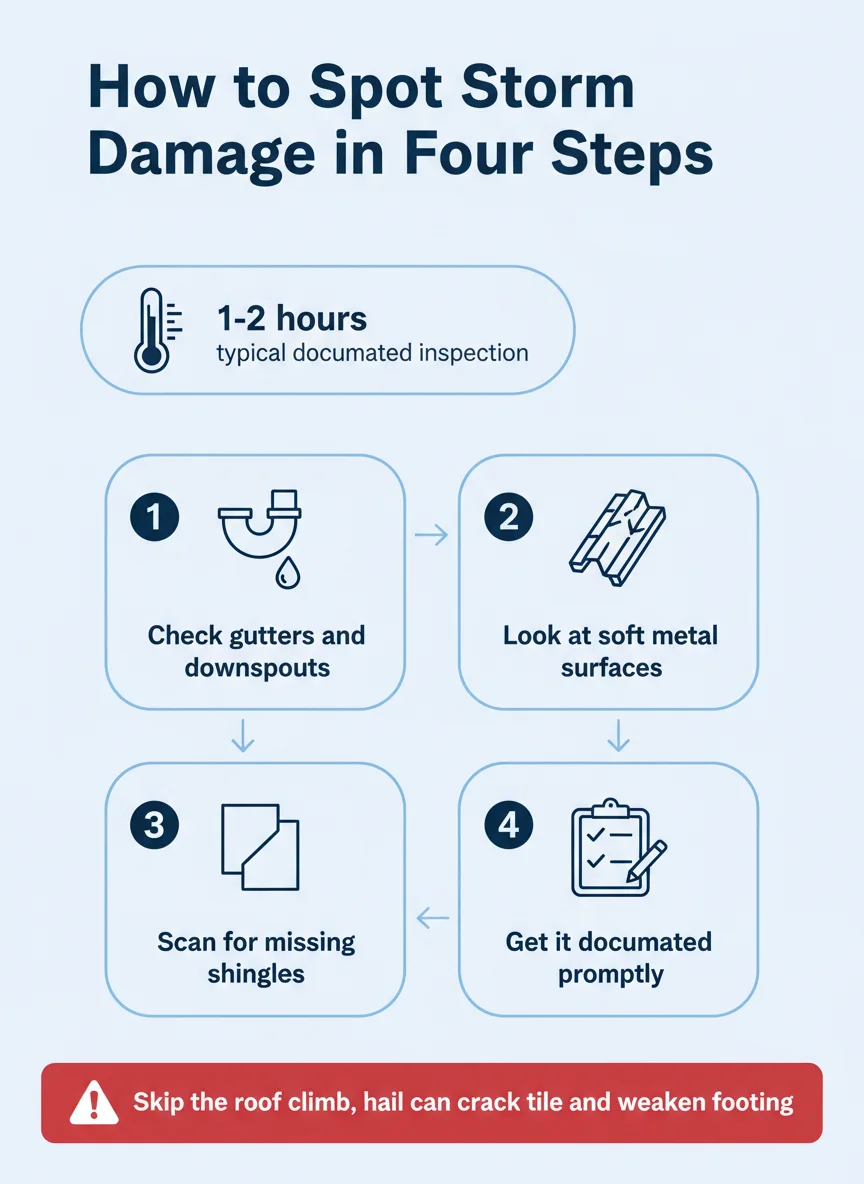
Start at ground level. Check gutters, downspouts, window screens, and any exposed metal like vent caps or air conditioning fins for dents, since those soft materials show hail impact clearly and give a good clue about how hard the roof itself was likely hit. A cluster of dents on the gutters is a strong signal it's worth having the roof looked at.
From the ground, scan for obvious missing shingles, exposed dark patches on the roof deck, or debris scattered across the yard. What you can't reliably check from below is granule loss and shingle creasing, which is why a ground survey is a good first step but not a substitute for someone walking the roof.
Step-by-step: what a storm damage inspection typically involves
A typical documented inspection runs about one to two hours, depending on roof size and how much detail the documentation requires.
- Ground-level survey: The roofer checks gutters, vents, and other soft metal for hail dents as a quick indicator of storm severity.
- Full roof walk: Every shingle surface gets checked for bruising, creasing, lifted tabs, and missing material section by section.
- Flashing and penetration check: Vent boots, chimney flashing, and valleys get extra attention since wind stress concentrates at these points.
- Photo documentation: Each area of damage gets photographed with enough detail to support a claim or a repair estimate.
- Report and next steps: You'll get a rundown of what was found and whether it points toward a repair or a broader replacement conversation.
What the findings usually point toward
Once the inspection is done, the pattern of damage generally sorts into one of two buckets. Either it's isolated enough to address directly, or it's widespread enough that the roof's remaining service life needs a second look.
Isolated damage
A handful of bruised shingles, one lifted section, or a few missing shingles concentrated in one area usually means a straightforward repair. This is common after a milder wind event or a storm that only clipped part of the property.
Widespread damage
Bruising and creasing spread across most of the roof, especially on a roof that was already getting up in years, usually points toward replacement being the more sensible path. Trying to patch dozens of scattered spots often costs more in the long run than addressing the whole surface at once.
What you can check yourself versus what needs a professional
The ground-level survey of gutters, vents, and visible shingle condition is something any homeowner can do safely right after a storm passes. It's a useful first step and helps you decide how urgently to get someone out.
Actually assessing granule loss, shingle creasing, and flashing condition requires walking the roof surface, which isn't something to attempt after a storm even for confident homeowners. Wet or bruised shingles lose grip fast, and the goal is a thorough, accurate accounting, not a quick guess from a ladder.
This is also where documentation matters most if insurance is part of the picture. A trained inspection produces the kind of detailed photo record that supports a claim, something a homeowner's own phone photos from the ground usually can't replicate.
Getting the roof checked after the next system rolls through
Hail and wind damage rarely announces itself the way a leak does, which is exactly why a post-storm check matters even when the roof looks fine from below. If you're weighing whether it's worth a storm and hail damage repair visit or filing a claim, it also helps to read up on filing a roofing insurance claim in Missouri before that call.
Homeowners across Overland Park and the rest of the metro deal with this same seasonal pattern most years. Signature Roofing has spent over 20 years helping neighbors across the region sort out what a storm actually did to their roof before it turns into something worse.
Frequently asked questions
How do I know if hail actually damaged my roof?
Hail damage usually shows up as small dark bruises on the shingles where granules have been knocked loose, along with dents in gutters, vents, or other soft metal around the property. It's not always visible from the ground, which is why a closer inspection matters even if the roof looks fine at a glance.
Can wind damage a roof without any visible holes?
Yes. Wind can lift and crease shingles without tearing them off completely, which weakens the seal and leaves the roof more vulnerable to leaks in the next rain even though nothing looks obviously missing. A trained eye can spot lifted tabs and cracked seals that aren't obvious from below.
How soon after a storm should I get my roof checked?
It's worth scheduling an inspection reasonably soon after a significant hail or wind event, since documenting the condition close to the storm date matters if you end up filing an insurance claim. Waiting too long can make it harder to tie damage to a specific event.
Does storm damage always mean I need a new roof?
Not necessarily. Isolated damage, like a handful of bruised shingles or a few lifted tabs, is often a repair. Widespread bruising across most of the roof surface, or damage on a roof that was already near the end of its life, tends to point toward replacement instead.
What does a storm damage inspection visit involve?
A roofer typically walks the roof surface checking shingles, flashing, and vents for bruising, creasing, or lifted material, and photographs anything found for documentation. Most of these visits run one to two hours depending on the roof size and how thorough the documentation needs to be.