
Why the Class 4 Rating Comes Up So Often in Missouri
If you've talked to more than one roofing contractor in the Kansas City metro, you've probably heard the phrase "Class 4" more than once. Missouri sits in a part of the country that sees regular hail activity through spring and early summer, and that exposure has made impact resistance a bigger part of the conversation than it is in states that rarely see hail at all.
The rating itself isn't a marketing term. It comes from a real test standard, and understanding what that test actually measures helps you cut through a lot of the sales pitch noise and figure out whether paying more for an impact-resistant shingle makes sense for your home.
What the UL 2218 Test Actually Checks
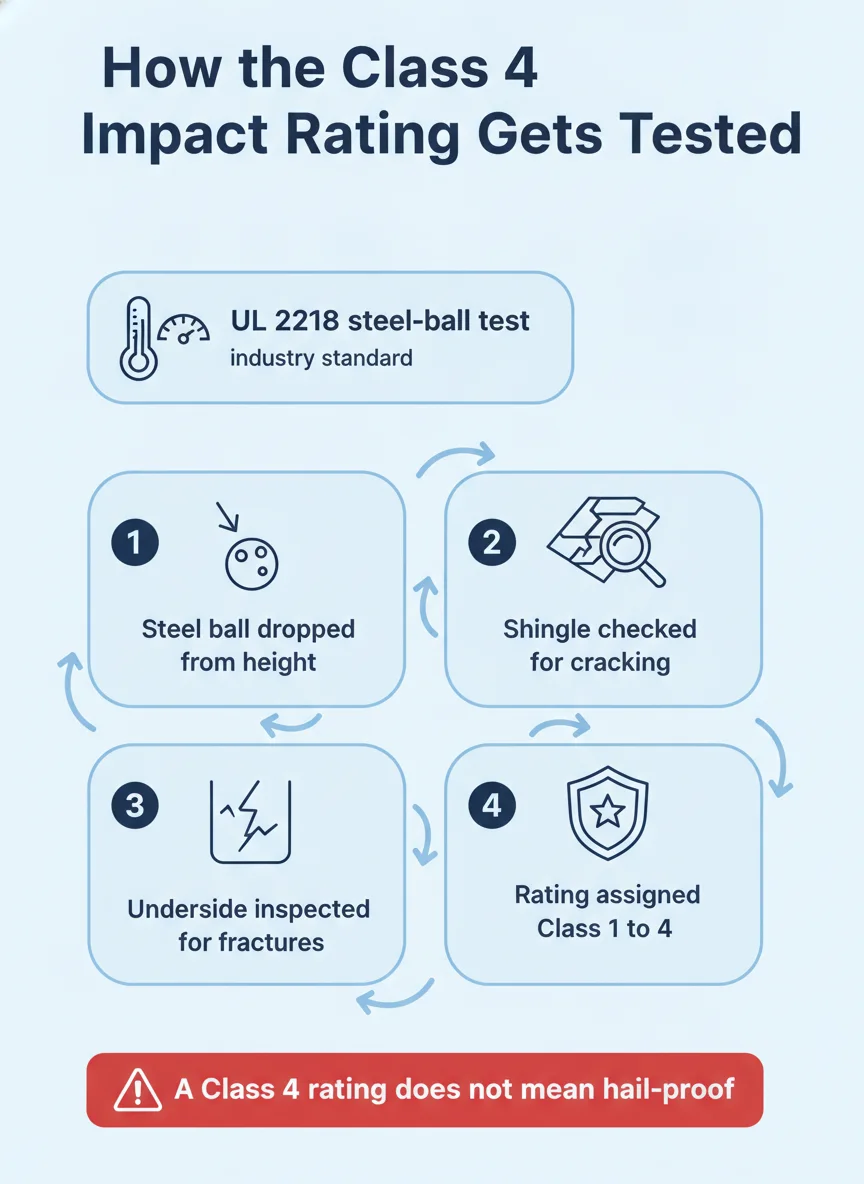
The test behind the Class 1 through Class 4 rating system is called UL 2218. A steel ball of a specified size is dropped from a set height onto a shingle sample, and a technician then checks both the top surface and the underside of the shingle for cracking or fracturing. A shingle that resists cracking at the toughest drop height earns the Class 4 designation, the highest of the four tiers.
What Class 4 Is Built to Resist
Class 4 shingles are typically manufactured with reinforced mat layers or modified asphalt formulations designed to flex rather than crack on impact. In the lab, that translates to better resistance against the kind of blunt-force hit a steel ball (and by extension, hail) delivers. Manufacturers that produce impact-resistant lines, including Owens Corning Duration products, design them specifically to hold up to this testing standard.
In practical terms on a roof, that often means fewer cracked shingles and less granule loss after a moderate hail event compared to a standard three-tab or lower-class architectural shingle hit at the same intensity.
What the Rating Does Not Cover
The test uses a controlled steel ball at a fixed size and drop height. Real hailstones vary wildly in size, density, and the angle and speed at which they strike a roof. A large enough hailstone, or one that hits at a sharp angle on an aging or already-weakened shingle, can still cause damage even on a Class 4 roof.
The rating also says nothing about wind resistance, UV durability, or how the shingle will perform against falling branches or other impact sources. It's a single data point about one type of stress, not a total durability score for the roof.
| Factor | Standard Shingle | Class 4 Shingle |
|---|---|---|
| Lab test result | Cracks at lower impact levels | Resists cracking at highest UL 2218 test level |
| Typical use case | Standard residential installs | Hail-prone regions seeking added durability |
| Hail-proof guarantee | No | No, still vulnerable to large or severe hail |
| Insurance treatment | Standard rate | Some insurers offer a discount, varies by company |
How Insurers Generally Treat Impact-Resistant Roofing
Some insurance companies offer a premium credit or discount for homes with Class 4 impact-resistant shingles, since the idea is that these roofs are statistically less likely to need a full claim after a moderate hail event. That said, discount structures vary widely from insurer to insurer and aren't guaranteed.
The only way to know what applies to your specific policy is to ask your insurance provider directly, or check with your state insurance department for guidance on how impact-resistant materials are treated in your area. Don't assume a discount exists until you've confirmed it in writing.
Step-by-Step: How to Check What's on Your Roof Now
If you're not sure whether your current roof already has impact-resistant shingles, there are a few places to look before assuming you need an upgrade.
- Check old paperwork: Look for the original install invoice or any leftover shingle wrapper, which usually lists the product name and class rating.
- Look for a shingle stamp: Many Class 4 shingles carry a small printed stamp or marking on the shingle itself identifying the impact class.
- Search the manufacturer site: If you know the shingle brand and line, the manufacturer's product page will usually list its UL 2218 rating.
- Ask during an estimate: A roofing contractor can often identify the shingle class during an on-roof look, especially if they install the same product lines regularly.
- Call your insurer: If you're not sure and want to know about a possible discount, your insurance company can tell you what documentation they'd need to apply one.
What to Expect When Comparing Options for a Replacement
If you're weighing a roof replacement and deciding whether to ask about Class 4 materials, it helps to think through what you're solving for. If your home has taken repeated hail hits over the years, or you're in a part of the Kansas City metro that sees regular severe weather, the added durability can be a reasonable long-term investment.
When the Upgrade Tends to Make Sense
Homeowners planning to stay in their house for many years, those in areas with a documented history of hail activity, or anyone whose insurer confirms a real discount for impact-resistant materials tend to get the most value out of the upgrade. It's also worth considering if you've had hail or wind damage more than once already.
When It's a Smaller Priority
If you're planning to sell within a couple of years, or your insurer doesn't offer any meaningful credit for the upgrade, the extra cost may not pencil out the same way. A standard architectural shingle, properly installed, still holds up well across a normal lifespan in Missouri's climate.
DIY Checks vs. Calling a Roofing Pro
Checking old paperwork, looking up a shingle brand online, or glancing at a wrapper left in the garage are all things a homeowner can do without climbing a ladder. That part of the research is low-risk and doesn't require any special tools or training.
Identifying a shingle class from the roof surface itself, especially on an older roof where the stamp has worn or the shingle style isn't obvious, is better left to a licensed contractor. Walking a roof safely and knowing what to look for takes experience, and a misread can lead to the wrong decision about repair versus replacement.
A contractor can also help translate what they find into a straight answer about whether an upgrade is worth discussing with your insurer, instead of guessing from product photos online.
Making the Call for Your Roof
The Class 4 rating is a useful piece of information, not a magic shield. Knowing what the test covers, and what it doesn't, puts you in a better spot to ask the right questions whether you're comparing roof repair after a storm or planning ahead for a future replacement in Overland Park or anywhere else in the metro.
If you're trying to figure out what's currently on your roof or want a straight answer about whether an upgrade fits your situation, Signature Roofing can take a look and walk you through it.
Frequently asked questions
What does a Class 4 shingle rating actually mean?
It means the shingle passed a standardized impact test, UL 2218, at the toughest of four levels by resisting cracking when a steel ball is dropped onto it from a set height. It's a lab measure of impact resistance, not a guarantee the shingle will come through every storm undamaged.
Are Class 4 shingles hail-proof?
No, and no roofing material sold today is truly hail-proof. Class 4 shingles are built to resist cracking and granule loss better than standard shingles in a lab test, but large hail or a direct hit at the right angle can still cause damage.
How can I tell if my roof already has Class 4 shingles?
Check the shingle wrapper left over from installation, the invoice from the original install, or look for a small stamp or marking printed on the shingle itself. If none of that is available, a roofing contractor can often identify the shingle during an on-roof look.
Do insurance companies give discounts for Class 4 shingles?
Some insurers offer a discount or credit for impact-resistant roofing, but policies and discount structures vary by company and by state. Check directly with your insurance provider or your state insurance department to see what applies to your policy.
Are Class 4 shingles worth the upgrade cost?
It depends on your storm exposure, how long you plan to stay in the home, and whether your insurer offers a meaningful credit for the upgrade. Homeowners in areas with frequent hail activity, which includes much of the Kansas City metro, often find the added durability worthwhile over the life of the roof.