
Why certification matters more than it used to
Shingle manufacturers sell the same product line to thousands of contractors, but only a fraction of those contractors earn certified status. In the Kansas City metro, where spring hail and wind put real stress on asphalt shingles, the gap between a certified install and a standard one can matter a lot when something goes wrong years down the road.
Homeowners researching a roof replacement often assume any contractor selling a name-brand shingle is equally qualified to back it up. That's not how it works. The brand name on the wrapper doesn't guarantee the installer meets the manufacturer's training and inspection bar, and that bar is exactly what determines how much of the warranty you actually get.
What the certification actually requires
Manufacturers don't hand out certified or preferred contractor status for free. It's earned through a combination of ongoing training, proof of active licensing and insurance, and a track record of installs that meet the manufacturer's written specifications.
Training and installation standards
Certified contractors go through manufacturer-run training on that specific product line, covering nailing patterns, ventilation requirements, and flashing details that affect whether a shingle performs the way it was engineered to. This isn't a one-time class either; staying certified usually means keeping up with updated standards as the manufacturer revises them.
The goal is consistency. A shingle rated for a certain wind speed or impact resistance only performs that way when it's installed to spec, which is why manufacturers tie their best warranties to installers who've proven they follow those specs job after job.
Insurance, licensing, and track record
Beyond the technical training, manufacturers typically require proof of state licensing and active liability insurance before granting certified status. They want assurance the contractor will be around and accountable if a warranty claim comes up.
Many programs also factor in a contractor's history, meaning a pattern of complaints or failed inspections can cost a company its certified standing. That ongoing accountability is part of what separates certified status from a one-time credential a roofer earns and then ignores.
| Factor | Certified installer | Non-certified installer |
|---|---|---|
| Shingle warranty tier | Access to extended, enhanced coverage | Standard limited material warranty only |
| Labor coverage from manufacturer | Often included in higher tiers | Typically not included |
| Verification | Listed in manufacturer's public directory | No manufacturer record |
| Install standards | Reviewed against manufacturer specs | No manufacturer oversight |
What the extended warranty actually covers
The extended warranty tiers certified contractors can offer usually go beyond the manufacturer's basic material defect coverage. Depending on the program, that can mean longer coverage periods, coverage that includes labor if a defect shows up, and coverage that's non-prorated for a longer stretch of time rather than shrinking in value year over year.
None of that replaces a contractor's own workmanship warranty, which covers installation errors rather than manufacturing defects. The two work together: the manufacturer backs the shingle, and the contractor backs the labor. Our 10-year workmanship warranty is a separate layer from anything Owens Corning covers on the material side.
Step-by-step: verifying a contractor's certification yourself
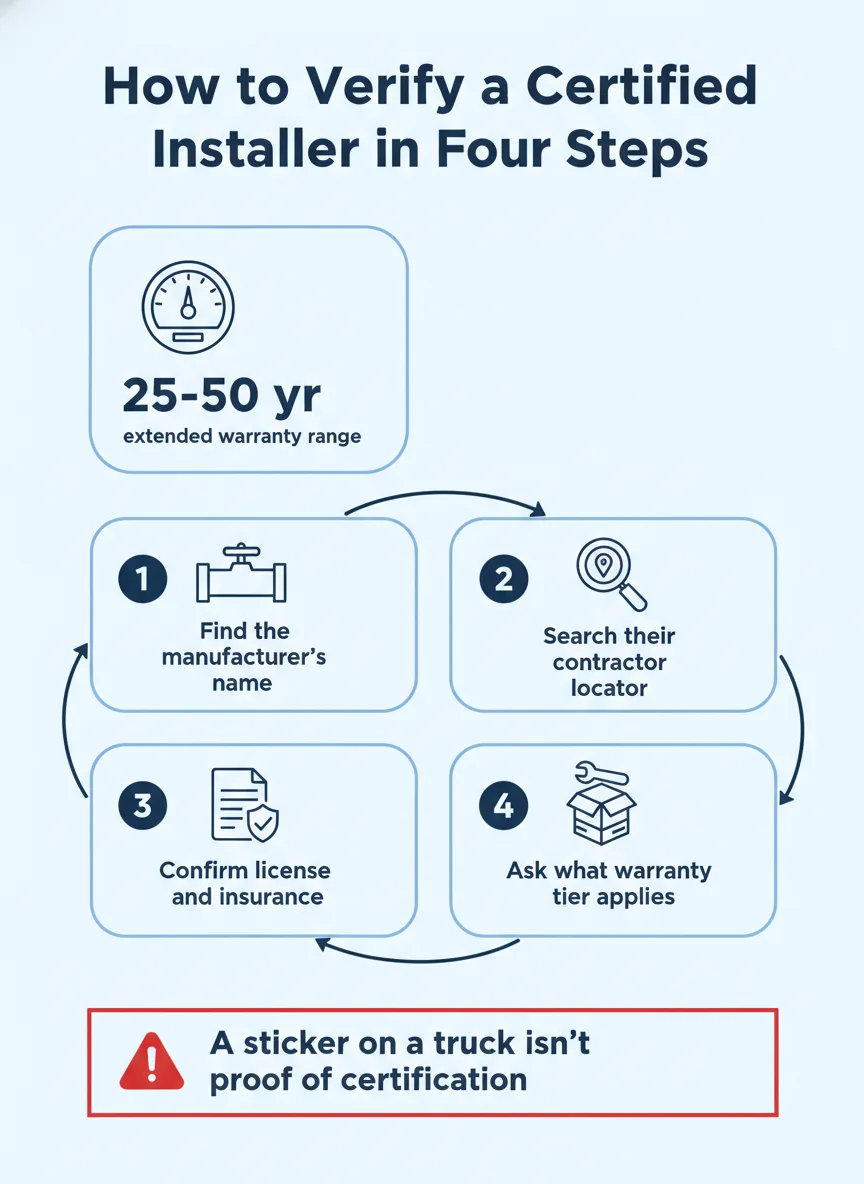
You don't have to take a roofer's word for it. Every major shingle manufacturer maintains a public way to confirm who's actually certified, and it only takes a few minutes to check before you sign a contract.
- Ask which brand: Find out exactly which manufacturer's certification the contractor is claiming, since each brand runs its own separate program.
- Search the locator: Go to that manufacturer's website and use their contractor locator tool, searching by company name or your zip code.
- Confirm the tier: Certification often comes in levels, so ask which tier applies and what warranty coverage comes with it.
- Check license status: Cross-reference the contractor's state license number to confirm it's active and matches the name on the certification.
- Get it in writing: Before work starts, ask for the warranty registration details in writing so there's no confusion about coverage later.
What happens if your roofer isn't actually certified
Reduced warranty coverage
If a shingle defect shows up years after install and your contractor wasn't certified, you'll likely find yourself limited to the manufacturer's basic material warranty, which usually doesn't cover labor to remove and replace the defective shingles. That cost falls back on the homeowner.
This is the scenario that catches people off guard, because the shingle brand itself is fine. The gap in coverage comes from who installed it, not what was installed, and it's rarely explained clearly at the time of the sale.
No manufacturer backing if the contractor disappears
Certified contractors have an ongoing relationship with the manufacturer, which gives homeowners a second point of contact if the original installer goes out of business. Without that certification, a homeowner whose roofer closes shop may have no path back to the manufacturer at all.
That's part of why certification is worth confirming before work begins rather than after a problem shows up. It's a quick check that can save a lot of frustration if something does go wrong down the line, whether from a defect or storm damage addressed under a storm and hail damage repair claim.
What homeowners can check themselves vs. what needs a pro
Verifying certification status, license numbers, and insurance is something any homeowner can and should do on their own before hiring anyone. It takes a web search and a phone call, and no roofing knowledge is required.
Understanding exactly which warranty tier applies to your specific project, though, is better handled with the contractor directly, since program details and coverage lengths vary and change over time. A reputable contractor should be able to explain the tier in plain language and show you the registration paperwork once the job is done.
Diagnosing whether an existing roof's issue is a material defect versus an installation or weather-related problem also isn't a DIY call. That distinction determines which warranty, if any, applies, and it usually takes a trained eye to sort out.
The bottom line for Kansas City metro homeowners
Certification is one of the more overlooked details in choosing a roofer, but it directly affects what happens if a material issue shows up years from now. Checking it before you sign a contract costs nothing and takes minutes, whether you're comparing bids in Kansas City or anywhere else in the metro.
Signature Roofing is an Owens Corning Preferred Contractor and has installed Owens Corning Duration shingles across the region for over 20 years, backing every job with a workmanship warranty on top of whatever manufacturer coverage applies.
Frequently asked questions
What does it mean when a roofer is manufacturer-certified?
It means the shingle maker has reviewed that contractor's training, licensing, and insurance, and approved them to install that brand's products under an enhanced warranty tier. It's a step above simply buying and installing the brand's shingles off the shelf.
Does a certified installer cost more than a regular roofer?
Not necessarily, though pricing still depends on the size, pitch, and materials of the job rather than the certification itself. The bigger difference shows up in the warranty coverage you get, not usually the quote.
How do I check if a roofer is really certified?
Most manufacturers run a public contractor locator on their website where you can search by zip code or company name to confirm active status. Ask the roofer for their certification level and cross-check it there before signing anything.
Can a non-certified roofer still install the same shingles?
Yes, shingles themselves are available to any licensed contractor who buys the material, but non-certified installs typically only carry the manufacturer's standard limited warranty. The extended, labor-inclusive warranty tiers are reserved for certified contractors.
Does certification replace a workmanship warranty from the roofer?
No, they cover different things. Manufacturer certification can extend coverage on the shingles and sometimes labor through the maker, while a [roof replacement](/services/roof-replacement) contractor's own workmanship warranty covers their installation separately.