
Why Roof Warranties Matter More in the Kansas City Metro
Homes across the Kansas City metro see a wide swing of weather in a single year, from summer heat that bakes shingles to spring storms that test every seam and nail. A roof replacement is one of the bigger investments a homeowner makes in a house, so the warranty behind the work matters almost as much as the materials themselves.
Yet warranty paperwork is often the part homeowners skim fastest, right after signing the contract and before the crew shows up. That's backwards. Understanding what your workmanship warranty actually covers, and for how long, tells you what protection you're standing on if something goes wrong three, five, or eight years down the road.
What Does a Workmanship Warranty Actually Cover?
A workmanship warranty covers the labor and the installation process, not the shingles or materials themselves. If a leak develops because flashing was installed incorrectly, or because fasteners weren't driven properly, that falls under workmanship. If the shingles themselves fail due to a manufacturing flaw, that's a separate claim against the manufacturer.
What's Typically Included
A solid workmanship warranty generally covers leaks traced back to installation errors, flashing problems around chimneys and vents, and issues with fastening or sealing that show up after the job is complete. It's meant to catch the kind of mistake that doesn't surface until the roof has been through a season or two of weather.
The strongest workmanship warranties are written down, with a stated term, and ideally transfer to a new owner if the house sells. A warranty that's only a verbal promise at the time of sale isn't much use five years later when the original salesperson has moved on.
What's Usually Separate
Material defects, like a batch of shingles that doesn't seal properly or curls prematurely, typically fall under the manufacturer's warranty rather than the installer's workmanship warranty. Storm damage, like impact from hail or wind-lifted shingles, is usually a separate matter handled through storm and hail damage repair and, where applicable, an insurance claim.
Normal wear from sun exposure and age also sits outside a workmanship warranty, since that's expected aging rather than an installation defect. Knowing this distinction up front keeps expectations realistic when a roof is a decade or more old.
| Coverage Type | Workmanship Warranty | Manufacturer Warranty |
|---|---|---|
| What it covers | Installation and labor errors | Defects in the shingle material itself |
| Who honors it | The roofing contractor | The shingle manufacturer |
| Typical term | A few years up to a decade or more, contractor-set | Often tied to the shingle product line |
| Transfers on sale | Depends on contractor terms, check in writing | Often transferable, check manufacturer terms |
What's Written Into a Workmanship Warranty
A written workmanship warranty should spell out three things clearly: the length of the term, what is and isn't covered, and whether it transfers to a future homeowner. Signature Roofing backs its installs with a 10-year workmanship warranty that's put in writing and transfers to the next owner if the house sells, which matters both for your own peace of mind and for resale value.
The length of a workmanship warranty is one signal of how a contractor stands behind their own labor. A short or vague term, or one that only exists verbally, gives you less to point to if an installation issue shows up years after the crew packed up.
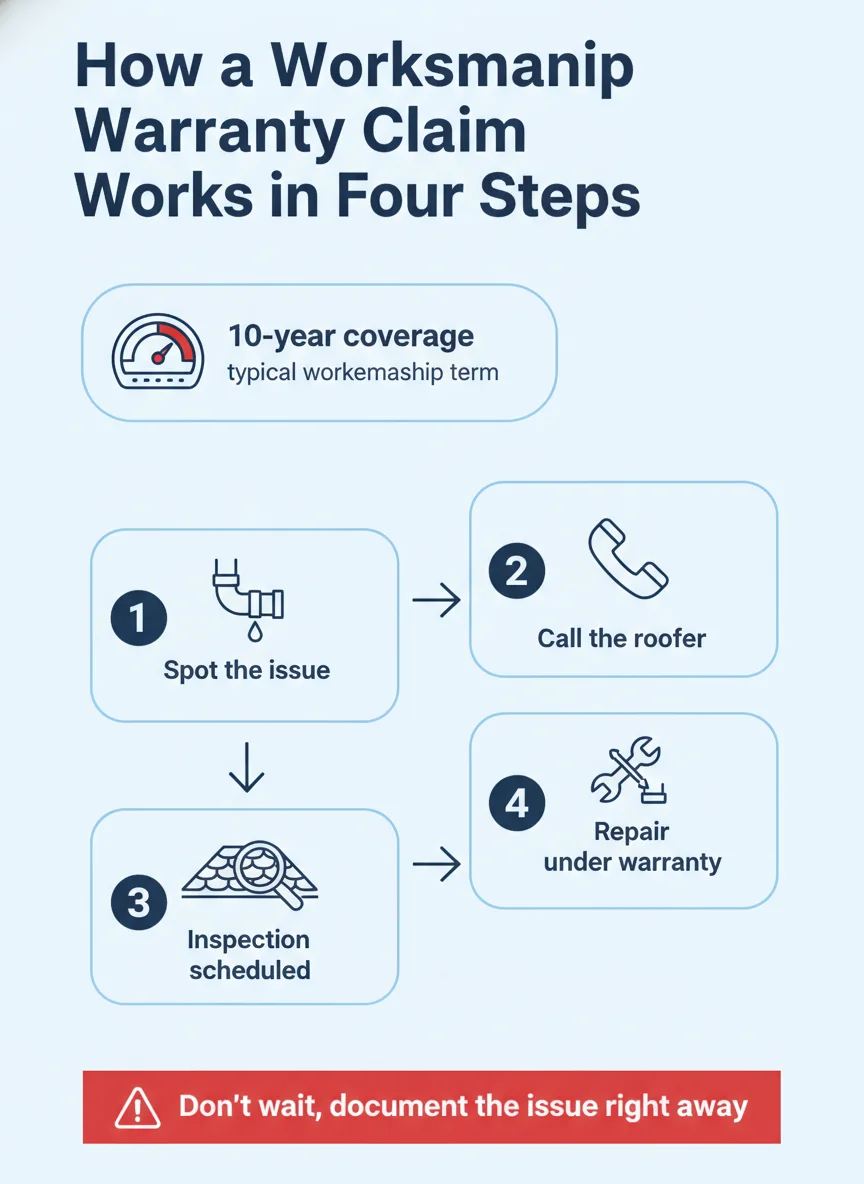
Step-by-Step: How a Workmanship Warranty Claim Works
If you notice a problem that might be covered under a workmanship warranty, the process generally follows a simple path from first spotting the issue to getting it resolved.
- Spot the issue: Notice a leak, a stain on the ceiling, or a loose section of roofing and take a few photos if you can safely see the area.
- Check your paperwork: Pull your written warranty documentation so you know the term length and what's covered before you make the call.
- Call the roofer: Reach out to the contractor who did the install and describe what you're seeing, including when it started and where.
- Inspection scheduled: A roofer typically schedules a visit to confirm whether the issue traces back to installation or to another cause.
- Scope confirmed: Once the cause is identified, the roofer tells you what falls under the workmanship warranty versus what might be a separate repair.
- Repair completed: Covered work gets scheduled and completed, generally without an added labor charge since it falls under the warranty terms.
What You'll Typically Find When a Claim Is Investigated
When It's a Workmanship Issue
A workmanship issue usually shows up as a leak concentrated around a specific detail, like a chimney, skylight, or vent, where flashing or sealing was the job of the installer rather than the shingle manufacturer. These issues tend to appear in one spot rather than spread across the whole roof.
If a roofer finds that fasteners were underdriven or a seam wasn't properly sealed during the original install, that's a clear workmanship call. This is exactly the kind of detail a roof repair visit is built to diagnose and fix.
When It's Something Else
Sometimes an inspection turns up damage that traces back to a storm event, like hail bruising or wind-lifted shingles, rather than an installation flaw. That shifts the conversation toward storm repair and, if applicable, your homeowners insurance rather than the workmanship warranty.
Other times, what looks like a leak is simply a roof reaching the end of its expected lifespan, with shingles that have aged past the point installation quality can explain. A straightforward conversation with your roofer should make clear which category your situation falls into before any work begins.
What Homeowners Can Check Themselves vs. What Needs a Pro
A homeowner can do a lot of the early legwork on a potential warranty issue without climbing onto the roof. Checking your closing paperwork for a copy of the original warranty, noting the date water stains first appeared, and taking photos from the ground or an attic access point all help speed up a claim conversation.
What a homeowner shouldn't do is climb up to inspect flashing or fastening themselves, both for safety reasons and because diagnosing an installation issue takes training most homeowners don't have. Misdiagnosing the cause can also complicate a legitimate warranty claim later.
A licensed roofer is who should confirm whether an issue is workmanship-related, material-related, or storm-related, since that determination affects which warranty or claim process applies. That diagnosis step is also where a reputable contractor's experience pays off, since they've seen the pattern before.
Keeping Your Warranty Working for You
The best time to understand your workmanship warranty is before you ever need to use it, not after a leak shows up during a spring storm. Ask for the term in writing, confirm whether it transfers if you sell, and keep the paperwork somewhere you can find it years later.
Signature Roofing has served the Kansas City metro for over 20 years as an Owens Corning Preferred Contractor, and backs its installs with a 10-year workmanship warranty that's written down and transfers to the next homeowner, so coverage doesn't disappear the day you sell the house.
Frequently asked questions
What is a roof workmanship warranty?
A workmanship warranty covers the labor and installation of your roof, meaning if a problem develops because of how the roof was installed rather than the materials themselves, the roofer fixes it at no added labor cost. It's separate from the manufacturer's warranty, which covers defects in the shingles or materials themselves.
How long should a workmanship warranty last?
Workmanship warranties commonly range from a few years to a decade or more depending on the contractor, so it's worth asking for the term in writing before you sign a contract. A longer written term, like the 10-year workmanship warranty Signature Roofing offers, generally signals a contractor confident in their install quality.
Does a workmanship warranty transfer if I sell my house?
Many workmanship warranties do transfer to a new homeowner, though the terms vary by contractor, so check the written warranty document for transfer language. A transferable warranty can also be a selling point if you list your home while the warranty is still active.
What's the difference between a manufacturer warranty and a workmanship warranty?
A manufacturer warranty covers defects in the shingles or other materials themselves, while a workmanship warranty covers the labor and installation process. You can have a material defect under one warranty and an installation issue under the other, so both matter and it helps to understand each one separately, as covered in our [manufacturer vs workmanship warranty guide](/blog/manufacturer-warranty-vs-workmanship-warranty-who-covers-what).
What voids a roof workmanship warranty?
Unapproved repairs by another contractor, certain types of storm damage, or skipped routine maintenance can sometimes void a workmanship warranty, depending on the terms. Reading the written warranty document before you need it is the best way to know what keeps your coverage intact.