
Why shingle cost questions come up so often in Missouri
Homeowners across the Kansas City metro ask about shingle pricing more than almost any other roofing topic, and it makes sense. Shingles are the most visible part of the roof, they come in a wide range of grades, and Missouri's weather, hot humid summers, cold winters, and plenty of hail and wind in between, means the shingle you pick has to earn its keep over a long stretch of years.
The honest answer is that shingle cost isn't one number. It's a combination of the product itself and the job it's going onto. Two homes with the same square footage can land on very different quotes depending on pitch, layers to remove, and the grade of shingle specified. Understanding the pieces that make up that number helps you compare quotes apples to apples instead of just looking at the bottom line.
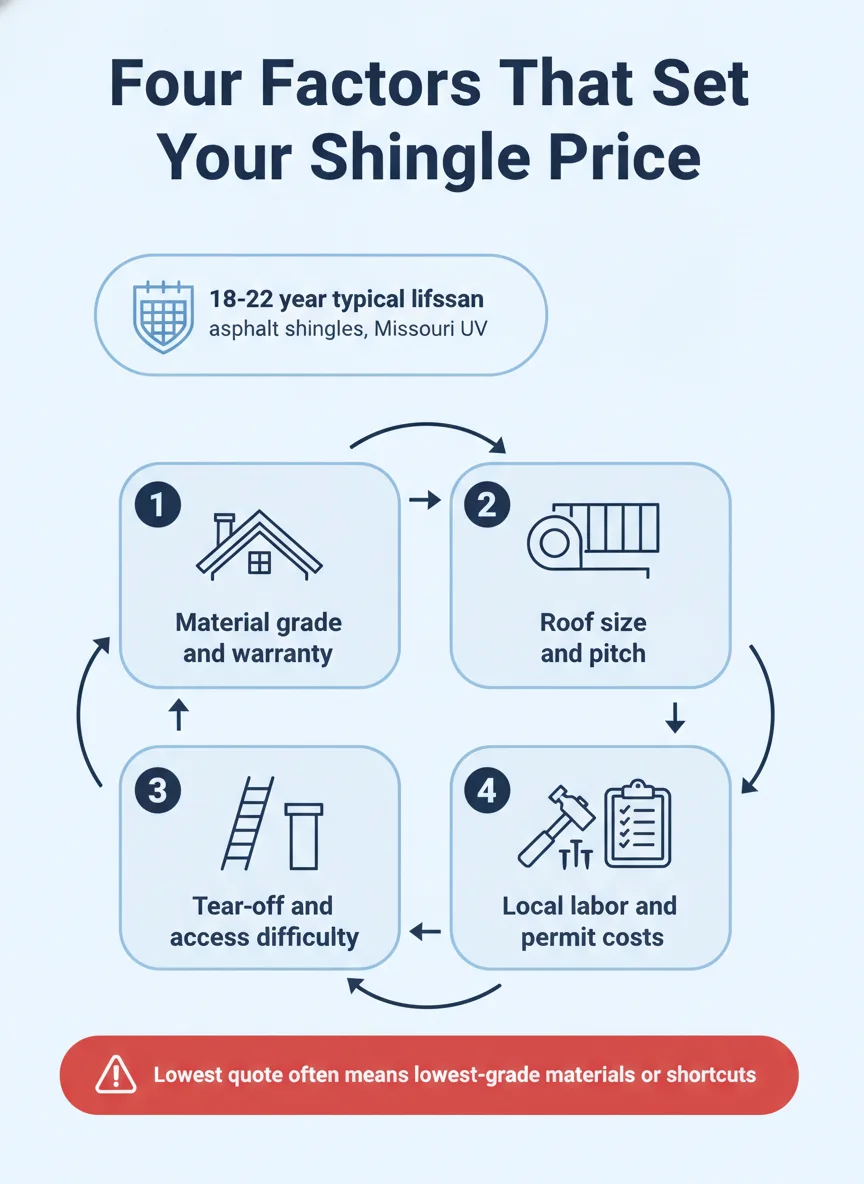
What actually drives the price of shingles
Shingle pricing breaks down into two buckets: the material itself, and everything it takes to get it installed correctly. Skipping either half of the picture is how homeowners end up comparing quotes that aren't actually comparable.
Material grade and warranty length
Shingles generally fall into a few tiers, from basic three-tab products up through architectural (laminated) shingles and impact-resistant options built for hail-prone regions. Architectural shingles use more material per bundle and typically carry longer manufacturer warranties, which raises the per-square cost but extends the service life.
Warranty terms matter beyond the shingle itself, too. A workmanship warranty from the installer is separate from the manufacturer's material warranty, and both affect what you're really paying for. A roof backed by a transferable workmanship warranty, like the 10-year coverage we offer, adds value that doesn't show up in the shingle price alone.
Roof size, pitch, and complexity
A simple ranch with a gentle slope uses labor efficiently. A steep, cut-up roof with multiple valleys, dormers, or chimneys takes longer to work safely and wastes more material at the cuts. That labor and waste shows up directly in the installed price, even when the shingle bundle itself costs the same.
Access matters too. A roof with easy ground staging near the house is quicker to load than one surrounded by landscaping, fencing, or a long carry from the driveway. None of this changes what the shingle costs at the distributor, but it changes what it costs to get it onto your roof correctly.
| Factor | Raises the price | Keeps it lower |
|---|---|---|
| Shingle grade | Architectural or impact-resistant | Basic three-tab |
| Roof shape | Steep pitch, many valleys/dormers | Simple, low-slope rectangle |
| Tear-off | Multiple old layers to remove | Single layer, easy removal |
| Access | Difficult staging, tall sections | Open yard, easy ground access |
What's actually under the shingles
A shingle roof is a system, not a single layer. Underneath the visible shingles sits underlayment, flashing around penetrations like vents and chimneys, and the decking itself. Pricing a roof on shingle cost alone misses the rest of what you're paying for, and what actually keeps water out.
This is also why a tear-off matters for cost conversations. Removing the old layers lets the crew check the decking for soft spots or rot before new shingles go down. Finding and replacing bad decking adds cost, but it's cost that protects the investment in the new shingles sitting on top of it.
Step-by-step: how a shingle quote typically comes together
Most reputable quotes follow a similar sequence, even if the numbers differ. Knowing the steps helps you ask better questions when you're comparing bids.
- Measure the roof: A contractor measures total square footage, pitch, and complexity to calculate material need and labor hours.
- Inspect the decking: Visible signs of rot, soft spots, or prior repairs get flagged since they may add cost once uncovered.
- Select the shingle: Homeowner and contractor settle on a material grade and color based on budget and desired warranty.
- Price tear-off and disposal: Removing old layers and hauling debris is priced separately from the new material and labor.
- Add flashing and ventilation: Any needed flashing, vent, or ridge work gets scoped since it's part of a complete install, not an add-on.
- Review the warranty terms: Manufacturer and workmanship warranty length and transferability are confirmed in writing before work starts.
How do you know if a quote is actually a good deal?
A quote is a good deal when it matches the shingle grade, warranty, and scope you actually asked for, not just the lowest total at the bottom. The cheapest bid on paper can mean a lighter shingle, a roof-over instead of a tear-off, or a shorter workmanship warranty.
Red flags in a shingle quote
Watch for quotes that don't specify the shingle brand or line by name, since that makes it impossible to compare against another bid. Vague language around tear-off ('as needed') can also hide a roof-over being proposed without you realizing it.
A quote with no written workmanship warranty, or one that's verbal only, is worth a second look. If something goes wrong after install, a verbal promise doesn't help much.
What a solid quote includes
A solid quote names the shingle product, states the tear-off scope clearly, and spells out the workmanship warranty in writing, including whether it transfers to a future buyer if you sell the home. It should also note any flashing, ventilation, or decking repair expected.
If storm damage is part of the conversation, a good quote process also explains how insurance claim assistance fits in, since insurance-driven jobs sometimes have different scope requirements than a straightforward out-of-pocket replacement.
What a homeowner can check versus what needs a licensed roofer
A homeowner can reasonably research shingle grades, compare manufacturer warranty terms online, and look at photos of a contractor's past work to get a sense of quality. Walking the yard to check how easy staging would be, or noting how many layers are currently on the roof from an attic inspection, are also things you can often observe yourself.
Measuring pitch accurately, assessing decking condition from the underside of the shingles, and judging whether existing flashing is reusable all require someone trained to spot the difference between normal wear and a real problem. These calls affect both safety and cost, and they're where a licensed roofer's judgment earns its place in the process.
The actual installation, cutting shingles at valleys, nailing at the manufacturer's required pattern, sealing flashing correctly, is licensed work for a reason. A shingle installed a quarter-inch off pattern can void the manufacturer's warranty entirely, which erases any savings from a cheaper labor quote.
Getting a shingle quote you can actually compare
The fastest way to make sense of shingle pricing is to get more than one quote and ask each roofer to name the exact shingle line, tear-off scope, and workmanship warranty length in writing. Once those three things are lined up side by side, the price differences usually make a lot more sense, and you can judge which quote is actually the better value rather than just the lower number.
If you're weighing a roof replacement against a smaller roof repair for a specific trouble spot, that's worth sorting out before shingle grade even enters the conversation, since it changes the whole scope of the quote. For a deeper look at how repair and replacement decisions get made, see our post on repair or replace: how roofers actually make the call. Homeowners in Overland Park and across the metro can reach out to Signature Roofing for a straightforward look at what a shingle quote should actually include.
Frequently asked questions
Why do shingle quotes vary so much between roofers?
Quotes vary because roofers price different material grades, warranty lengths, and labor approaches, not because one roofer is simply overcharging. A quote using a basic three-tab shingle will always undercut one using an architectural or impact-resistant shingle, even on the identical roof.
Do thicker shingles cost more?
Yes, heavier architectural shingles generally cost more per bundle than basic three-tab shingles because they use more material and carry longer warranties. The extra thickness also tends to hold up better against Missouri's wind and hail swings.
Does roof shape affect shingle cost?
Yes, a steep pitch, multiple valleys, or lots of dormers and chimneys all add labor time and waste, which raises the installed cost even if the shingle itself is the same. A simple rectangular roof is the cheapest shape to shingle.
Is it cheaper to shingle over an old roof instead of tearing it off?
A roof-over can lower labor cost up front, but most roofers recommend a full tear-off so the deck can be inspected and the new shingles lie flat. Skipping tear-off can shorten the life of the new shingles and may violate the shingle manufacturer's warranty terms.
Does shingle color change the price?
Shingle color itself usually doesn't change the price, since most manufacturers price by product line rather than by shade. Availability of a specific color at the time of your project can occasionally affect lead time, though.