
Why Roof Replacement Quotes Vary So Much Across the Metro
Ask three roofing contractors in the Kansas City metro for a quote on the same house and you'll likely get three different numbers. That's normal. Roofs differ in pitch, square footage, the number of valleys and vents, and the condition of the decking underneath the shingles, and every one of those details changes labor time and material needs.
The bigger issue for most homeowners isn't the spread in numbers, it's not knowing what each number actually includes. A quote that looks cheap on paper can leave out tear-off, new underlayment, or code-required ventilation upgrades, and those gaps show up later as change orders or a roof that doesn't perform the way it should.
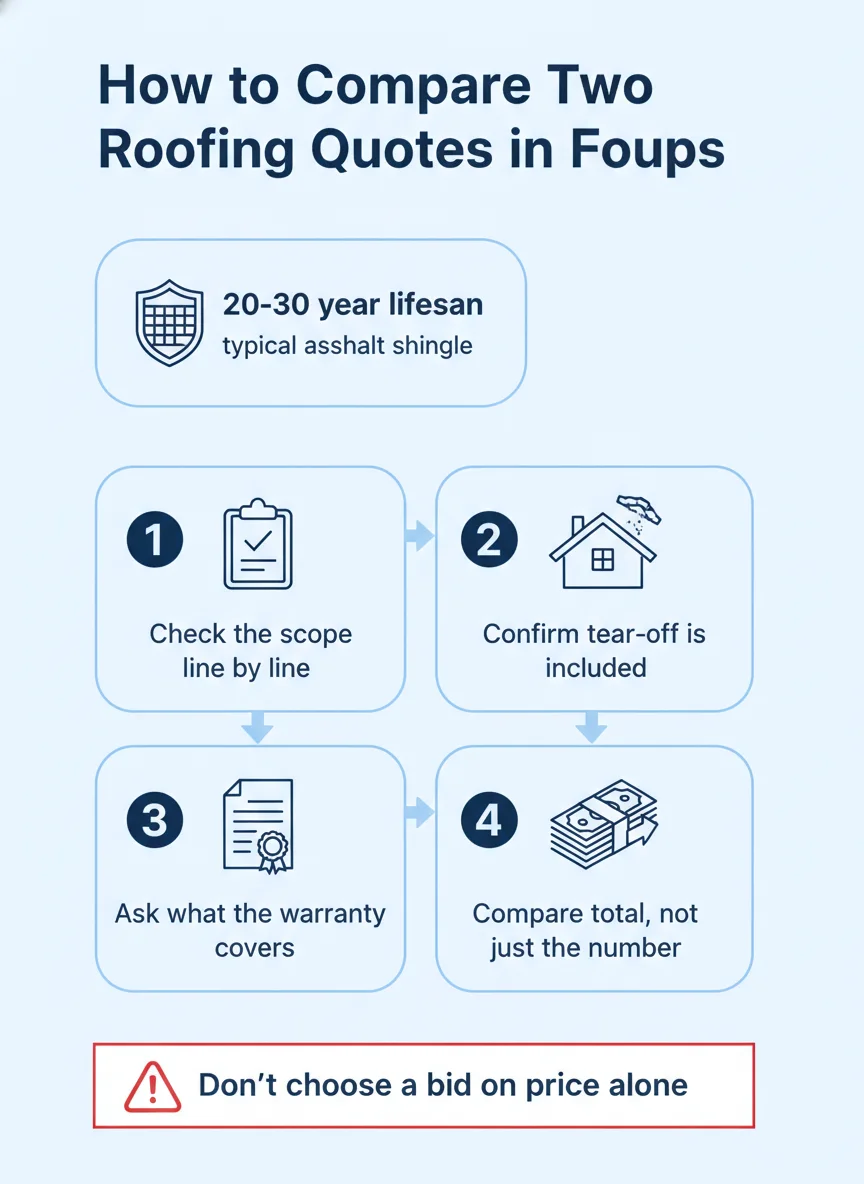
What Actually Goes Into a Roof Replacement Quote
A full quote generally breaks down into labor, materials, tear-off and disposal, and any site-specific work like flashing repair or deck replacement. Understanding each piece makes it much easier to see why two bids for the same house can land so far apart.
Materials and Labor
Material cost depends on what you're installing. Owens Corning Duration shingles, which is what we install on most of our jobs, sit in the architectural shingle category and are priced differently than basic three-tab shingles or metal panels. Labor cost scales with the complexity of the roof, a simple gable roof takes less time than one with multiple valleys, dormers, and penetrations for vents and chimneys.
Some quotes bundle labor and materials into one number, others break them out separately. Either approach is fine as long as you can see what you're actually paying for. If a contractor can't explain the split when you ask, that's worth noting before you sign anything.
Tear-Off, Disposal, and Site Conditions
Removing the old roofing material, hauling it away, and disposing of it properly is real labor and real cost, and it should be a visible line on your quote. Some lower bids skip full tear-off and install new shingles over the old layer instead, which can save money upfront but shortens the life of the new roof and may not meet code depending on how many layers are already there.
Site conditions matter too. A steep pitch, a second story, limited driveway access for equipment and dumpsters, or decking that turns out to be soft once the old shingles come off can all add cost that a contractor couldn't fully see from the ground during the estimate.
| Quote Line Item | What It Covers | Why It Varies |
|---|---|---|
| Tear-off and disposal | Removing old shingles and hauling debris | Depends on layers, access, and local disposal fees |
| Materials | Shingles, underlayment, flashing, vents | Varies by brand, grade, and roof square footage |
| Labor | Crew time to install the new system | Depends on pitch, valleys, and penetrations |
| Deck repair | Replacing rotten or soft plywood found during tear-off | Not knowable until the old roof is off |
The Parts of a Roof That Drive the Price
Underneath the shingles, a roof system includes decking, underlayment, flashing around chimneys and vents, and intake and exhaust ventilation. Each of these plays a role in how long the roof lasts and how it performs in Missouri's seasonal swings between humid summers and freezing winters, and each adds cost when it needs attention.
Flashing failures and poor ventilation are two of the most common reasons a roof underperforms its expected lifespan, so a quote that skips these in favor of a bare-bones shingle swap may look cheaper but can cost more in repairs down the line. A thorough quote should spell out what's being done with each of these components, not just the shingle brand going on top.
Step-by-step: How to Get and Compare Roof Replacement Quotes
Getting quotes you can actually compare takes a little structure. Walking through the same steps with every contractor you talk to makes the final decision much clearer.
- Get an in-person look: A contractor should walk the roof or inspect it closely before giving a firm number, not just estimate from a photo.
- Ask for a written scope: Request a quote that lists materials, tear-off, disposal, and any flashing or deck work separately.
- Confirm the material grade: Ask exactly which shingle line is being installed and whether it matches what was discussed.
- Check licensing and insurance: Confirm the contractor carries current license and liability coverage before work starts.
- Ask about the warranty: Find out whether the warranty covers workmanship, materials, or both, and how long it lasts.
- Compare total scope, not just price: Line up what each quote includes side by side before deciding which number is the better deal.
What a Low Quote and a High Quote Usually Mean
When a Low Bid Is a Red Flag
A quote that's noticeably lower than the others often means something is missing from the scope, not that you found a deal. It might skip tear-off, use a lower-grade material than discussed, or leave out flashing and ventilation work entirely. It can also signal a contractor who isn't carrying proper insurance, which shifts risk onto you if something goes wrong during the job.
Before accepting a low number, ask the contractor directly what's included and what isn't. A legitimate roofer should be able to walk through the scope without hesitation. If the answer is vague, treat that as a reason to keep comparing rather than a reason to sign.
When a Higher Bid Is Worth It
A higher quote isn't automatically the safer choice either, but it's often reflecting a more complete scope, a stronger warranty, or materials backed by a manufacturer certification. If the higher bid includes full tear-off, new underlayment, and a documented workmanship warranty, the extra cost is buying real protection rather than just a markup.
The goal isn't to assume high means good or low means bad. It's to get enough detail from each contractor that you're comparing the same scope of work at different prices, rather than guessing at what each number actually buys you.
DIY vs Calling a Pro
There isn't much of a DIY path for a full roof replacement. Tear-off, deck repair, underlayment, and proper flashing all require tools, safety equipment, and know-how that go well beyond a weekend project, and mistakes here cause leaks that are expensive to fix later.
What a homeowner can reasonably do is the homework before the job: researching material options, understanding basic ventilation needs, and learning what a fair scope of work looks like so quotes make sense when they come in. That groundwork puts you in a stronger position during every conversation with a contractor.
Once it's time for the actual installation, a licensed, insured roofer should handle every step, from tear-off through final cleanup. That's also where a Roof Replacement visit starts, with someone walking the roof and giving you a scope you can actually evaluate against other bids.
Getting a Fair Quote on Your Next Roof
Comparing roof replacement quotes gets a lot easier once you know what should be on the page: tear-off, materials, labor, flashing, ventilation, and a written warranty. Homeowners in towns like Overland Park and across the metro run into the same wide range of numbers, and the difference almost always traces back to scope rather than one contractor simply charging more for the same job.
If you're weighing a few bids right now, it's worth reading How to Choose a Roofing Contractor in Missouri alongside this one before you sign anything. Signature Roofing has been putting roofs over heads in the Kansas City metro for over 20 years and is glad to walk through a quote with you line by line.
Frequently asked questions
What makes one roof replacement quote higher than another?
Differences usually come down to scope, not just markup. One quote might include full tear-off, new underlayment, and upgraded ventilation while another only covers a layover, so the lower number can mean less work, not a better deal.
Should I always pick the lowest roof replacement quote?
No, the lowest quote is worth a second look before you accept it. Compare what's included, the warranty terms, and whether the contractor is licensed and insured before deciding on price alone.
Does roof size affect the price the most?
Square footage is a major factor but it isn't the only one. Pitch, the number of valleys and penetrations, decking condition, and material choice all move the total up or down.
Can I get an accurate roof replacement quote without an in-person look?
A reliable quote generally requires someone to walk the roof or at minimum do a close visual inspection. Phone or satellite-image estimates can be a useful starting point, but the firm number usually comes after a contractor sees the roof in person.
Does insurance change what a roof replacement costs me?
If the damage is storm or wind related and your policy covers it, your deductible and policy terms determine what you pay out of pocket. A roofer who works with insurance claims can help you understand how an approved claim affects your total.