
Why This Decision Matters for Kansas City Metro Homes
If you're planning a Roof Replacement anywhere from Liberty to Overland Park, you've probably run into the asphalt versus metal question at some point in the process. Both materials are common across the Kansas City metro, and both can be installed to handle the region's mix of ice, heat, and spring hail. The real question isn't which one is objectively better, it's which one fits your budget, your roofline, and how long you plan to own the house.
This decision carries more weight than picking a shingle color because it affects what the roof costs upfront, how it ages over the next few decades, and what kind of maintenance it needs along the way. A homeowner in Overland Park weighing a tile-pitched ranch against a steep Victorian in the city has different considerations even with the same two materials on the table. Getting the comparison right before you sign a contract saves a lot of second-guessing later.
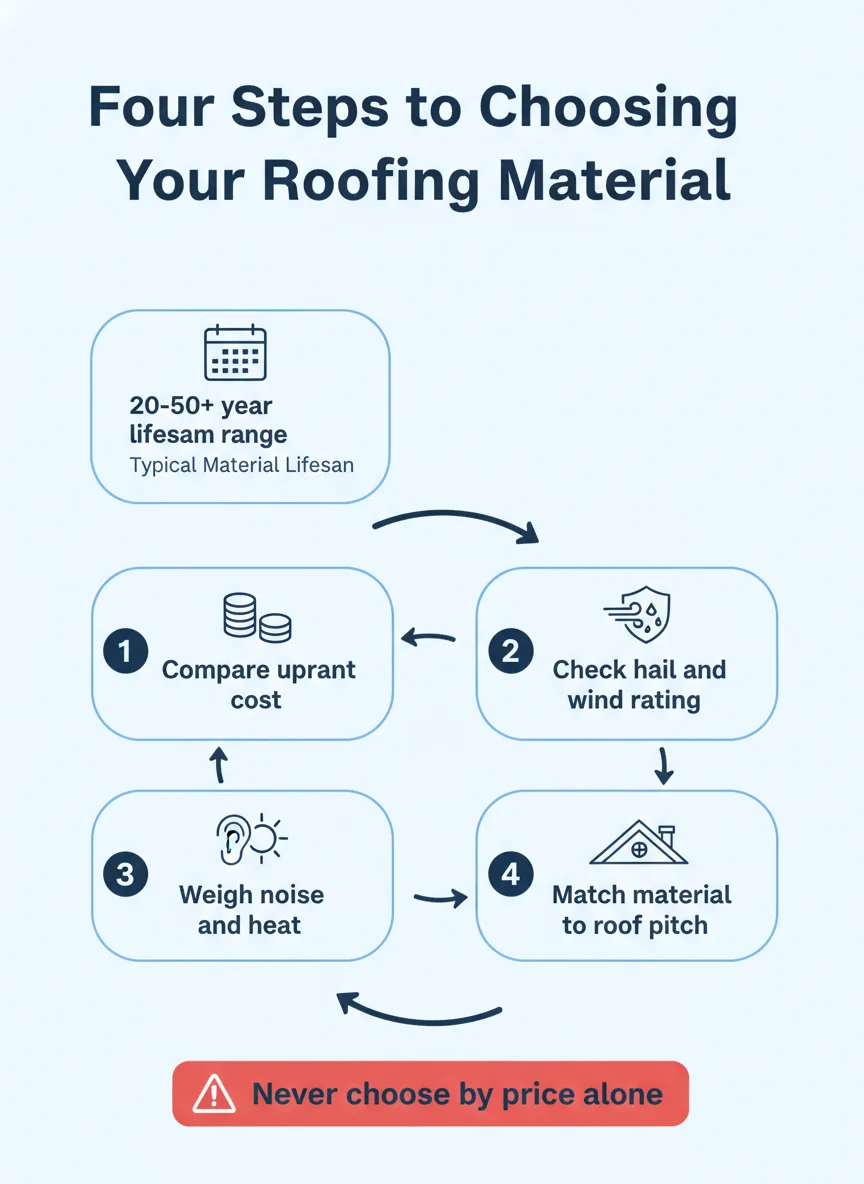
How Each Roofing Material Handles Missouri Weather
Missouri roofs deal with a wide temperature swing across the year, occasional ice buildup in winter, and hail producing storms that roll through most springs. Both asphalt and metal are engineered to handle this range, but the way each material responds to heat, impact, and wind differs enough that it affects how the roof looks and performs ten or twenty years down the road.
Asphalt Shingles in Heat, Hail, and Wind
Asphalt shingles are a layered mat with an asphalt coating and mineral granules on top, and that layering is what lets them flex a little under hail impact instead of cracking outright. Summer heat softens the asphalt slightly, which actually helps the shingle seal down and resist wind uplift once it's cooled back down, a quality most architectural shingle lines are built around.
Where asphalt shows its age is granule loss and curling after repeated UV exposure and thermal cycling, which is the normal wear pattern across the industry rather than a flaw specific to one brand or install. Impact-resistant shingle lines exist specifically to hold up better against hail, which matters given how often this region sees hail producing storms each spring.
Metal Roofing in Heat, Hail, and Wind
Metal roofing sheds heat differently than asphalt, reflecting more solar radiation off the surface rather than absorbing it, which is part of why metal roofs are often marketed around energy efficiency. In wind, a properly fastened standing seam or screw-down panel system resists uplift well because the panels interlock or fasten directly into the structure rather than relying on an adhesive seal.
Hail is the one area where metal behaves differently from shingles rather than simply performing better. A metal panel is far less likely to puncture or crack, but it can dent depending on the gauge of the metal and the size of the hail, which shows up as a cosmetic issue on the surface rather than a functional leak point.
| Factor | Asphalt Shingles | Metal Roofing |
|---|---|---|
| Upfront cost | Lower installed cost in most cases | Higher installed cost, more material and labor |
| Typical service life | Around 18 to 22 years industry wide | Commonly cited at 40 to 70 years |
| Hail behavior | Absorbs impact, can bruise or crack | Resists puncture, can dent cosmetically |
| Noise and heat | Quieter, absorbs some solar heat | Reflects more heat, can be louder without solid decking |
What's Actually Under Each Roof System
Both roof types rely on the same foundation underneath, solid decking, underlayment, and proper flashing around penetrations like vents and chimneys. The difference is what sits on top of that foundation and how it's attached. Asphalt shingles are nailed down in overlapping courses, with each row covering the nail line of the row below it, which is why a single missing or lifted shingle can expose a nail line to water.
Metal roofing comes in a few common styles, including standing seam panels that interlock along raised ribs and screw-down panels fastened directly through the surface. Standing seam tends to last longer because the fasteners are hidden and protected from direct weather exposure, while screw-down systems cost less but need the exposed fasteners checked and resealed periodically over the roof's life.
Step-by-step: How to Decide Between Asphalt and Metal
There's no universal right answer here, but working through the same questions a roofer would ask helps narrow it down fast.
- Set your budget range: Decide what you're comfortable spending upfront, since metal typically costs more to install than asphalt shingles of comparable quality.
- Check your roof pitch: Steeper roofs show off standing seam metal well, while lower pitch roofs often work fine with either material if drainage is handled correctly.
- Think about how long you'll stay: A longer hold time makes metal's higher upfront cost pencil out better against its longer expected service life.
- Consider your hail exposure: If your property has a history of hail damage, weigh how each material handles impact, cosmetic dents on metal versus bruising on shingles.
- Factor in noise tolerance: If you have a finished attic space or bedrooms right under the roof deck, ask your contractor how the system will be insulated against rain noise.
- Get quotes on both: A side-by-side quote on the same roof for both materials makes the cost difference concrete instead of theoretical.
Which Homes Each Material Suits Best
When Asphalt Shingles Make Sense
Asphalt shingles tend to make the most sense for homeowners working within a tighter budget, planning to sell within the next decade or two, or matching the look of a neighborhood where most homes already have a shingle roof. The wide range of shingle styles and colors also makes it easier to match an existing architectural style without standing out.
They're also the simpler material to repair piecemeal if only a section of the roof takes damage, since a contractor can often match and replace a damaged area without redoing the whole roof. That flexibility is one reason asphalt remains the most common material across the Kansas City metro.
When Metal Roofing Makes Sense
Metal roofing tends to fit homeowners planning to stay in the house long term, who want to minimize how often they're replacing the roof over their lifetime. It also suits steeper rooflines and homes where the owner wants a distinct, modern look that stands apart from the shingle roofs around it.
Metal is also a strong fit for homeowners who want to reduce attic heat buildup in the summer, since the reflective surface keeps less solar heat moving into the living space below compared to a dark asphalt roof. The tradeoff is a higher installed cost and fewer contractors locally equipped to install and service it compared to asphalt.
DIY vs Calling a Pro
Neither material is a reasonable do-it-yourself project for a full installation. Both require working at height, cutting and fastening material to exact specifications, and tying in flashing correctly around chimneys, vents, and valleys, which is where most leaks originate on either roof type when the work is done poorly.
Where a homeowner can reasonably step in is the research and decision-making phase. You can measure your own roof pitch, estimate square footage from the ground, and compare manufacturer specs online before ever calling a contractor. That homework makes the quoting conversation faster and more useful once you do bring in a pro.
The installation itself, along with any tear-off of the old roof, belongs with a licensed roofing contractor who carries insurance and can warranty the workmanship. A properly installed roof depends on dozens of small details done consistently across the whole surface, and that consistency is hard to replicate without the training and tools a professional crew brings to the job.
Making the Right Call for Your Home
There isn't a wrong answer between asphalt and metal if the material is installed correctly and matched to your budget and timeline. The bigger risk to a roof's performance usually comes down to installation quality rather than which material you picked, which is why the contractor matters as much as the shingle or panel brand on the invoice.
If you're still weighing the two options, it helps to read up on How Long Does a Roof Last in Missouri? alongside this comparison before you request quotes. Signature Roofing installs and repairs both shingle and metal roof systems across the Kansas City metro and can walk through which option fits your home during an on-site look.
Frequently asked questions
Is metal roofing worth the extra cost compared to asphalt shingles?
It depends on how long you plan to stay in the home and how much upfront cost you want to absorb. Metal typically costs more to install than asphalt shingles, but it's often expected to last longer and needs less recoating or patching over the years, so the value shows up over time rather than on day one.
How long do asphalt shingles last compared to metal roofing in Missouri?
Asphalt shingles in a Missouri climate typically run in the 18 to 22 year range industry wide, while metal roofing is commonly cited at 40 to 70 years depending on the panel type and finish. Actual lifespan on either material depends heavily on installation quality, attic ventilation, and how many hailstorms the roof takes over its life.
Does metal roofing hold up better in hail storms than asphalt shingles?
Metal generally resists puncture better than asphalt in hail, but it can still dent, which is a cosmetic issue more than a functional one in most cases. Asphalt shingles, especially impact-rated versions, are built to absorb hail impact rather than resist it, so the shingle itself takes the damage instead of your roof deck.
Is a metal roof noisier than asphalt shingles during rain?
A metal roof can sound louder in heavy rain if it's installed directly over open framing, but most modern metal roofing systems go over solid decking and underlayment the same way shingles do, which cuts the noise down significantly. Asphalt shingles tend to be quieter by default because of the extra mat and granule layer.
Can metal roofing go over existing asphalt shingles?
In some cases a metal roof system can be installed over one existing layer of asphalt shingles, but it depends on local code, the condition of the deck underneath, and the specific metal product's installation requirements. A licensed roofer can tell you whether your existing roof is a candidate for this during an on-site look.