
Why Roof Warranties Confuse Homeowners in the Kansas City Metro
Spring storms roll through the Kansas City metro almost every year, which means a lot of homeowners end up replacing a roof earlier than they planned and signing paperwork they haven't seen before. Somewhere in that stack is at least one warranty, sometimes two or three, and each one covers something different.
The confusion usually starts because people assume one warranty covers everything, the shingles, the labor, the flashing, all of it. In reality, a new roof typically comes with separate layers of coverage issued by different parties, and understanding who issued each one and what it actually protects is the only way to know what you're covered for if something goes wrong.
What Actually Makes a Roof Warranty Valid
A warranty is only as good as the paper it's written on and the party standing behind it. Before comparing terms or years, it helps to understand the two main categories almost every roof warranty falls into.
Manufacturer Material Warranties
A manufacturer material warranty comes from the company that made the shingles or roofing product, not from the contractor who installed them. It covers defects in the product itself, things like shingles that crack prematurely, granule loss far beyond normal wear, or a manufacturing flaw that shows up over time. Terms and coverage details vary by manufacturer and are published on their own warranty documents.
These warranties are usually prorated after an initial period, meaning the manufacturer's coverage shrinks the older the roof gets. They also typically cover material cost only, not labor to remove and replace the defective product, unless you've purchased an enhanced or extended version of that same warranty through a certified installer.
Workmanship Warranties
A workmanship warranty comes from the roofing contractor, not the manufacturer, and it covers problems caused by how the roof was installed rather than a flaw in the product. Leaks from improper flashing, nail patterns that don't hold up, or ventilation mistakes made during the install all fall under this type of coverage.
Because the contractor issues and backs this warranty, its value depends heavily on the contractor still being in business and standing behind their word. A written workmanship warranty with clear terms, like a stated number of years and whether it transfers to a future buyer, is worth asking for before you sign a contract.
| Warranty Type | Who Issues It | What It Typically Covers |
|---|---|---|
| Manufacturer material warranty | Shingle or product manufacturer | Product defects, prorated coverage for materials |
| Workmanship warranty | The installing contractor | Installation errors, labor to fix contractor mistakes |
| Enhanced or extended warranty | Manufacturer, through a certified installer | Combines material and some labor coverage for a longer stated term |
The Layers of Coverage on a New Roof
Think of a new roof as having up to three stacked layers of protection. The base layer is the standard manufacturer material warranty that comes automatically with the product, no extra steps required. The second layer is the contractor's workmanship warranty, which is separate paperwork tied to the installing company rather than the shingle brand.
The third layer, when it's offered, is an enhanced or extended warranty that a manufacturer makes available only through contractors who've met their certification standards. These combine elements of material and labor coverage into one longer document, but they're only available if the installer qualifies, which is worth asking about during an estimate for Roof Replacement.
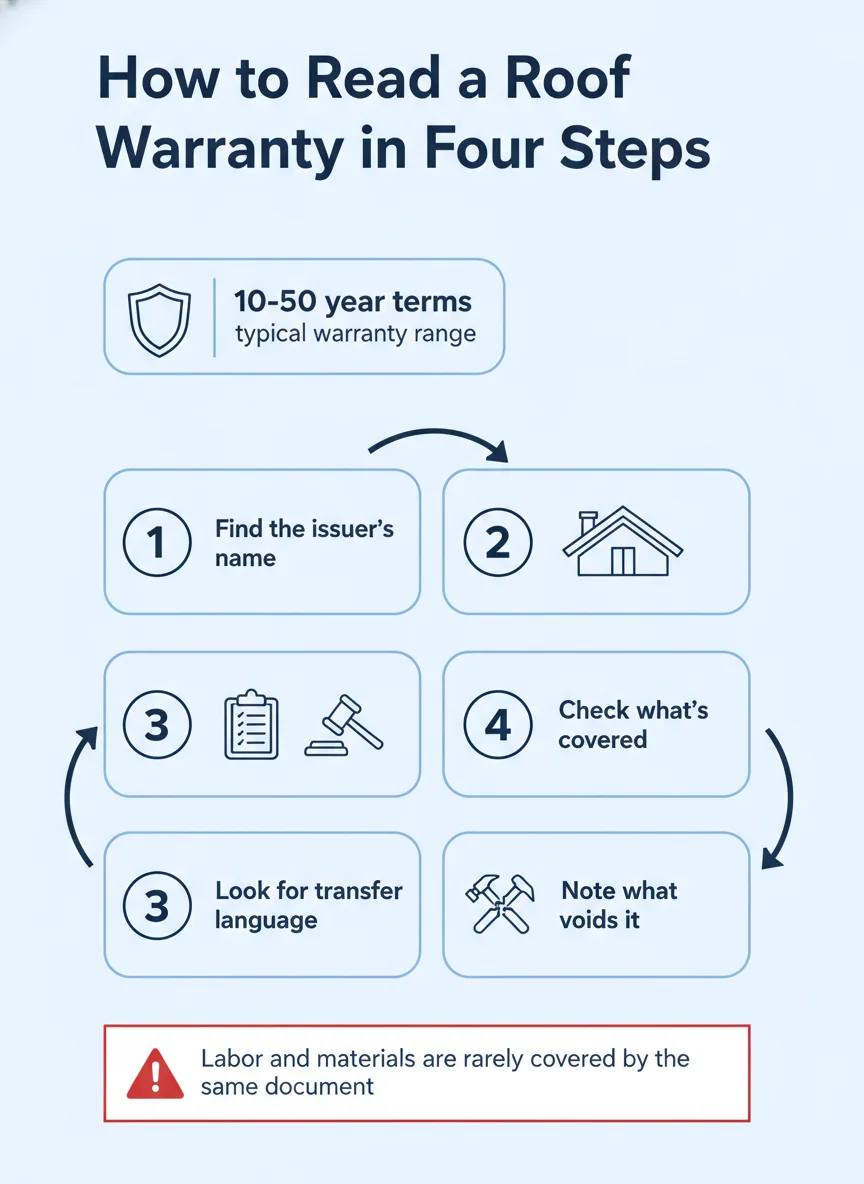
Step-by-step: How to Read Your Roof Warranty Paperwork
Warranty documents are written by lawyers for manufacturers, not for homeowners, so they can be dense. Working through them in order makes the important parts easier to find.
- Identify the issuer: Check the top of the document to see whether it's from the manufacturer or the contractor, since each covers different things entirely.
- Read the coverage section: Look specifically for whether labor is included or if the warranty only covers the cost of replacement material.
- Check the term length: Note whether coverage is full-term or prorated after a certain number of years, since prorated coverage shrinks over time.
- Find the transfer clause: Some warranties transfer to a new homeowner automatically, others require registration within a set window after a sale.
- Review the exclusions list: This section spells out what voids coverage, including maintenance requirements and unapproved repairs by other contractors.
- Keep a copy on file: Store the warranty with your closing documents so it's easy to find if you need to file a claim years later.
What Voids a Roof Warranty
A warranty that looks solid on paper can still fall apart if certain conditions aren't met. Two areas cause most of the denied claims homeowners run into.
Installation and Maintenance Issues
Manufacturer warranties generally require the product to be installed according to their specifications, which is part of why using a certified installer matters. They may also require basic maintenance, like keeping the roof clear of debris and addressing minor issues like loose flashing promptly rather than letting small problems turn into bigger ones.
If a roof is altered later by a different contractor, such as a satellite dish mount or solar panel installation that punctures the shingles outside the original scope, that work can void the portion of the warranty covering the affected area, even if the rest of the roof is untouched.
Transfers and Ownership Changes
Selling a house doesn't automatically carry every warranty with it. Manufacturer warranties often require the new owner to register the transfer within a specific window after closing, and missing that window can forfeit the remaining coverage entirely.
A workmanship warranty that explicitly states it transfers to the next owner, in writing, is a genuine selling point worth mentioning if you ever list the house. It's also worth asking for in writing before a contractor starts the job, not after, since verbal promises don't hold up the same way.
DIY vs Calling a Pro for Warranty Questions
Reading through your own warranty paperwork is something any homeowner can do, and it's worth doing the week the job finishes while the details are fresh. Filing it with your other home records and noting the transfer deadline on a calendar takes a few minutes and prevents a missed window years down the road.
Where it gets harder is interpreting a denial or figuring out whether a specific type of damage, like what shows up after a Storm & Hail Damage Repair visit, falls under the manufacturer's coverage, the workmanship warranty, or neither. That determination usually requires someone who deals with these documents regularly.
A licensed roofing contractor can review the specific wording of your warranty against the damage you're seeing and tell you which party, if any, is responsible for the repair. That's also the point where a conversation about a Roof Repair versus a warranty claim usually happens, since not every repair needs to go through a warranty process at all.
Choosing a Roof Backed by Real Coverage
A roof is one of the largest investments most homeowners make in their property, and the paperwork behind it deserves the same attention as the installation itself. Comparing material, workmanship, and extended coverage before a job starts, not after, is what keeps a homeowner from discovering gaps the hard way. Homeowners in Parkville and across the region can also compare notes with the maintenance habits covered in A Missouri Roof Maintenance Calendar.
Ask any roofing contractor for their workmanship warranty in writing before signing a contract, and ask whether the manufacturer offers an enhanced warranty through their certification program. Signature Roofing provides a 10-year workmanship warranty in writing on every job, and it transfers to the next owner if the house is sold.
Frequently asked questions
What's the difference between a material warranty and a workmanship warranty on a roof?
A material warranty comes from the shingle or product manufacturer and covers defects in the product itself. A workmanship warranty comes from the contractor who installed the roof and covers mistakes made during installation, which is a separate issue from a defective product.
Does a roof warranty transfer to a new homeowner if I sell the house?
It depends on the specific warranty and how it's written. Some workmanship warranties transfer to the next owner as a selling point, while manufacturer warranties often have their own transfer rules and sometimes a window of time after the sale to register the transfer.
What usually voids a roof warranty?
Most warranties can be voided by improper installation, using unapproved materials or accessories, skipping required maintenance, or unresolved ventilation problems that the manufacturer says contributed to the failure. Reading the exclusions section before you sign is the only way to know exactly what applies to your roof.
Is a longer warranty always a better deal?
Not necessarily. A long manufacturer warranty on materials doesn't help you if the installation was poor, and a long workmanship warranty from a contractor who closes up shop in a few years isn't worth much either. The length matters less than who's standing behind it and how clearly it's written.
Do I need to register my roof warranty after installation?
Many manufacturer warranties do require registration within a set window after the install to stay valid, so check the paperwork your contractor hands you at the end of the job. A workmanship warranty from the installing contractor typically doesn't require separate registration since the contract itself documents it.