
When a Storm Opens Up Your Roof
Missouri sees its share of spring and summer storms that bring straight-line winds, hail, and the occasional falling limb, and it only takes one of those to put a hole in a roof. One minute the roof is doing its job, the next there's daylight coming through the attic or water spreading across a ceiling. It happens fast, and most homeowners have never had to deal with it before.
The first 24 hours after that kind of damage matter more than people expect. What you do in that window can limit how much water gets into the house, how much the interior damage spreads, and how smoothly an insurance claim moves later. None of it requires special skills, just a clear head and a plan for what to do, and what to leave to a professional.
Why Tarping Works and What It's Really Doing
A tarp isn't a repair, it's a barrier. Its whole job is to stop more water from getting into the house while the weather settles and a permanent fix gets scheduled. A properly secured tarp spans the damaged section and extends well past its edges, with the material anchored to solid roof deck or framing rather than just the shingles around the hole.
What a Tarp Can Do
A good tarp job buys time. It keeps rain out of the attic and living space, protects insulation and drywall from soaking through, and gives a roofer room to plan the real fix without racing another storm. For a family, that's the difference between a contained problem and a ceiling that caves in a week later.
It also protects what's underneath the surface. Roof decking that stays dry is decking that doesn't need to be replaced on top of whatever repair was already needed. A tarp put on correctly within the first day after damage often means less work, not more, once a crew comes back to finish the job.
What a Tarp Cannot Do
A tarp does not restore the roof's structure or its ability to shed water long-term. Wind, sun, and time all work against it, and a tarp that looked solid the day it went up can loosen within a couple of weeks. It's not built to survive another hard storm the way the original roof was designed to.
It also won't tell you the full extent of the damage. Hail and wind can lift shingles or crack flashing in spots that aren't obvious from the ground or even from under a tarp, which is why a full assessment from Storm & Hail Damage Repair usually follows once things calm down.
| Situation | Tarp Alone | Tarp Plus Follow-Up Repair |
|---|---|---|
| Active leak during a storm | Slows water intrusion temporarily | Stops the leak and restores the roof |
| Small branch or shingle damage | Covers the opening short-term | Addresses the source, not just the symptom |
| Large opening from a fallen limb | Buys days, not weeks, before it fails | Repairs deck, framing, and covering as needed |
What a Tarp Setup Actually Involves
A proper tarp job uses a heavy-duty tarp sized generously larger than the damaged area, battens or boards to pin the edges down, and fasteners driven into solid wood rather than just the shingle layer. The goal is a surface that sheds water the same direction the roof already does, with no low spots where water can pool and work its way under the edge.
Crews also check what's around the damage, not just the hole itself. Nails backed out by wind, lifted flashing near a chimney or vent, and granule loss on surrounding shingles all affect how the tarp needs to be positioned and how urgently a full repair should follow.
Step-by-Step: What to Do in the First 24 Hours
You don't need to wait for a crew to show up before protecting your home. These steps keep you safe and limit damage while help is on the way.
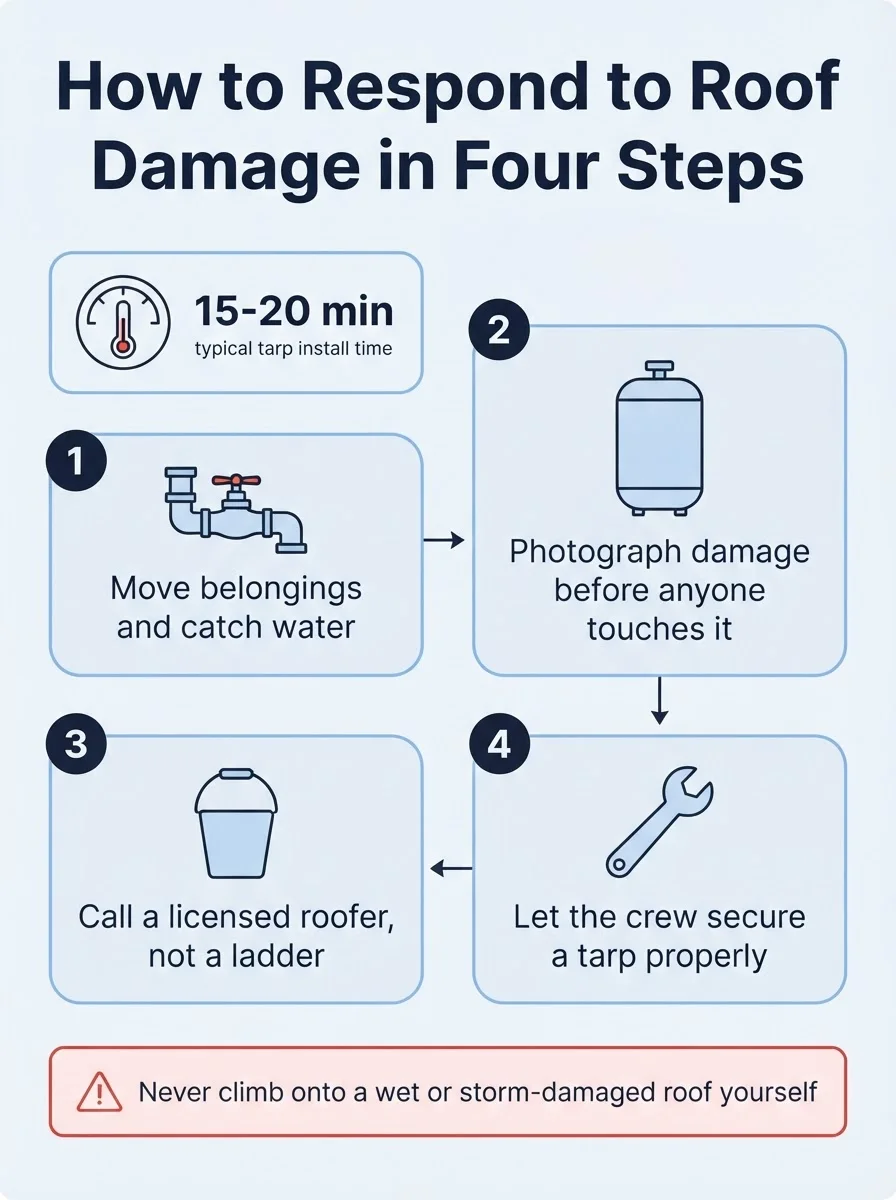
- Move what you can: Pull furniture, rugs, and electronics away from the leak, and lay down towels or tarps on floors that are at risk.
- Catch the water: Set buckets or containers directly under the drip and empty them regularly so they don't overflow onto flooring.
- Shut off power if needed: If water is dripping near outlets, light fixtures, or a breaker panel, shut off power to that area until it's dry.
- Photograph everything: Take wide and close-up photos of the damage, the source if visible, and any interior water stains before anyone touches the area.
- Call a licensed roofer: Reach out to a professional roofing team to arrange tarping and an inspection rather than attempting it yourself.
- Stay off the roof: Leave climbing up and assessing the damage to the crew, especially while surfaces are wet or weather is still unsettled.
- Hold onto your photos: Keep the images and any notes about when the damage happened in case your insurance company requests them.
What You'll Find Once the Tarp Comes Off
Once the storm has passed and a full assessment happens, the damage underneath a temporary tarp usually falls into one of two categories: something a focused repair can fix, or something that points toward a larger replacement. Which one you're looking at depends on how much of the roof was affected and how old the covering was to begin with.
Contained Damage
If the opening came from a single limb or a localized patch of missing shingles, a crew can typically replace the affected section, check the decking underneath for soft spots, and seal it back up. This is the more common outcome when the tarp went on quickly and kept water from spreading.
Our Roof Repair team handles this kind of focused fix regularly, and it often resolves the issue without touching the rest of the roof.
Widespread Damage
If hail accompanied the wind, or if the roof was already aging before the damage happened, the inspection may turn up issues beyond the tarped section, like granule loss across multiple slopes or cracked shingles from the impact. In that case, a broader repair or a full replacement conversation makes more sense than patching one spot.
Either way, a clear inspection and photo documentation makes it easier to know which direction makes sense, and it supports the conversation if you're working through an insurance claim at the same time.
What You Can Handle and What Needs a Pro
Everything inside the house is fair game for a homeowner to handle in the moment: moving belongings, catching water, documenting the scene, and keeping the area dry and safe. These steps don't require climbing anything and they make a real difference in how much interior damage you end up dealing with.
Anything on the roof itself is a different story. Tarping done wrong can create new leak points, miss damage that isn't visible from the ground, or simply fail in the next round of wind. A licensed roofer brings the harness, the experience reading how water moves across a given roof shape, and the judgment to know when a tarp is enough and when it's masking something bigger.
There's also the insurance side of things. A professional assessment with clear photos and documentation tends to move a claim along faster than a homeowner's best guess, and it protects you if questions come up later about when and how the damage happened.
Getting Through the First Day
The first 24 hours after roof damage are stressful, but they don't have to be chaotic. Protect what's inside the house, document what happened, and get a professional on the roof instead of a ladder from the garage. That combination limits damage now and sets up a smoother repair later, whether that's a quick patch or something larger.
If you're dealing with it right now, or you want to understand what a repair might involve once the tarp comes down, the repair or replace guide walks through how that decision usually gets made. Homeowners in Kansas City and across the metro can reach Signature Roofing when storm damage needs a tarp and a plan.
Frequently asked questions
What should I do first if my roof is leaking during a storm?
Move furniture, electronics, and anything valuable out from under the leak, then set out buckets or towels to catch the water. Stay off the roof itself until the weather clears and a professional can assess it safely.
Is it safe to tarp my own roof after storm damage?
It's not recommended. Roofs are slick after rain or hail, footing is unreliable, and a tarp that isn't anchored correctly can blow off or create new leak points, so this is best left to a crew with the right harnesses and experience.
How long can a tarp stay on a roof before it needs a real repair?
A tarp is a temporary fix, not a long-term solution, and it's meant to hold for days to a few weeks while permanent repair or replacement gets scheduled. Sun exposure and wind will wear a tarp down over time, so it should never be treated as a finished repair.
Will my homeowners insurance cover emergency tarping?
Many policies cover reasonable steps taken to prevent further damage, which can include tarping, but coverage details vary by policy, so it's worth checking with your insurer directly. Keep photos and any receipts in case they're needed for a claim.
What should I photograph before a tarp goes on?
Photograph the damaged area from multiple angles, any interior water stains or ceiling damage, and anything that caused the damage, like a fallen limb, before anyone touches or covers it. These photos help document the loss for your insurance company and for the roofer handling the repair.